






















By Helen Petre
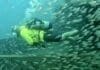
Lots of living things are in our springs. Florida is blessed with lots of clear, cold, freshwater springs. All of our springs have karst topography and are filled with water from the Floridan Aquifer. Some springs are in state and county parks, and some are on water management land with free, accessible, 68-degree F water any time we decide to jump in.
What is in there with us? The springs are home to many wild organisms. If you look before you jump, you will see fish. Most people call all the small fish minnows. Science geeks know better. All small fish are not minnows, and all minnows are not small.
Here are a few organisms at home in our springs:
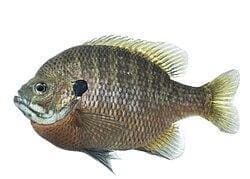
Those fish swimming around the edge are probably sunfish (Lepomis species). Bluegills, or bream, brim, or sunnies, (L. macrochirus) have vertical stripes. They nest in shallow water on sandy bottoms. The male makes the nest, invites the female to lay her eggs, and fertilizes them. Then the father to be guards the eggs until they hatch.
Bluegills, and other sunfish, also live in swallow water in rivers, lakes and ponds.
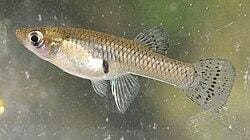
Eastern mosquito fish (Gambusia holbroki) are small fish that stay near the surface. They have live births. The females are the big ones. Gestation takes about a month and results in about 50 young. The young mature in about a month. Besides mosquito larva, adults eat the young. Mosquito fish consume mosquito larva, but so do bluegills and many other fish.
Mosquito fish live in our cold springs, but they also live in warmer ponds and rivers.
Mosquitos prefer warm water, so springs are not a hot spot for mosquitos. It is a good thing mosquito fish are omnivores. They eat any insect larva, algae, and detritus.
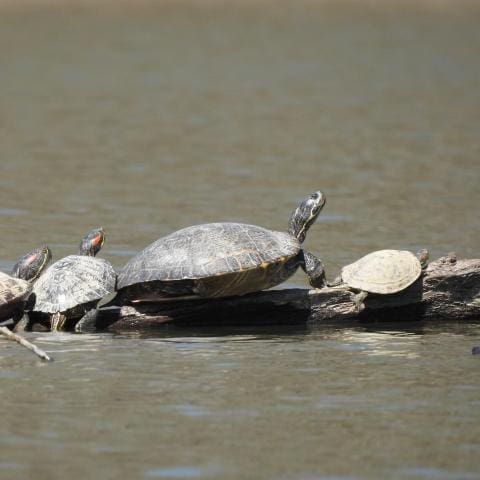
Other than fish, springs are good homes for turtles. The River cooter, (Pseudemys concinna), is the most commonly seen turtle. River cooters are often basking in the sun, sometimes piled up on top of each other. They are quick to dive in when they perceive a threat. Cooters look like yellow bellied sliders, but sliders usually live in warmer, darker water, and are more yellow.
Male cooters are smaller than females and have long nails. They stroke the female during courtship. After mating in the water, the female lays about 15 eggs on land. The hatchlings are round, about one inch in diameter, green and yellow.
River cooters eat mostly plants. They can stay underwater for long periods of time because they can take oxygen from the water through their cloaca, or their butts.
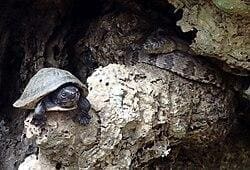
Another common springs turtle is the Loggerhead musk turtle (Sternotherus minor). When musk turtles feel threatened, they stink, just like skunks.
Loggerhead means big head, and this five-inch-long turtle has a big head to crunch snails and crayfish. Like cooters, musk turtles stay in the water, but if they do come out, they can run pretty fast. We have one at the E.O. Wilson Center. Turtle Bob named him Elon.
After mating in the water, females lay two or three eggs on the shore. Hatchlings are about one inch long.
Yes, there are snakes at springs too. Brown water snakes (Nerodia taxispilota) are large, common snakes that are often in or around freshwater. They have a big head attached to a skinny neck. Because they sort of look like cottonmouths, people tend to be frightened of them, but fear not, they are not venomous. They mate in trees and give birth to about 40 live young, each about ten inches long.
Although they are nonvenomous, if threatened, they bite vigorously and defecate, which likely induces the offender to leave them alone. They are really just big snakes that hang out in trees over water and eat fish.
Next time you visit the springs, enjoy the animals that live there. Since you know their names, they are your friends! Jump in and enjoy this paradise we share!
Helen Petre is a retired biologist, enjoying life on the Panhandle. If you have any science, nature, or wild questions, or have suggestions for articles, please email: petrehelen@gmail.com.
 RSS
RSS