Home Blog Page 46

The Good Samaritan

By Jack Smith

Last week I had to travel from Lake Powell to Panama City to see a client. We all say that we love and need the tourists, however they have turned a fifteen minute drive into an hour. After sitting in bumper to bumper traffic for 55 minutes I got off on the 23rd St. exit in Panama City only to run out of gas.

In a rage, I walked over a mile in 94 degree heat and stopped in at Camping World and purchased a gas can. I then walked another half mile to the gas station, purchased fuel and began the walk back. I had hip replacement surgery this year and it finally said enough.
In desperation I stopped in at a used car dealership named “Lucky Motors” (I did not know how aptly named it was). There I met Arsen, who after one look at my exhausted, sweating body, sprang into action. He returned me and my gas can to the car, only to find that the battery was now dead. Undeterred, Arsen took me back to the shop and picked up a battery charger,. Only we couldn’t get to the battery, because when dead the computer shuts down all the power. He then called his friend who was a locksmith. Did I mention that it was 94 degrees? He, of course, refused any money.

If you are in need of a dependable used car, or just want to meet an honorable man, stop in at Lucky Motors and say hi to Arsen. I promise, you’ll feel better about life, but maybe not the tourists.

Panama City Beach Senior Center: No Off-Season Here!

By Jamie Zimchek

When it comes to picking the perfect place to spend your golden years, there are a number of reasons Panama City Beach beats out the competition (from the balmy climate to the area’s stunning beaches). But this fine coastal community has more to offer than just sun and sea. For one, there’s the Panama City Beach Senior Center, a centrally located facility a hop skip from the Panama City Beach Public Library and next-door to Lyndell Conference Center. Run by the Panama City Beach Senior Service Foundation with Mugsy Parens at the helm (Parens also heads up the Lyndell building), the foundation keeps life lively for members between long days on the sand, even during the summer months.

Sr Pcb Life 4Given, things get particularly busy during the winter when snowbirds descend from chillier destinations to the north, but there is no shortage of off-season activity, with a to-do list that include games, crafts, and exercise. Membership is open to those 50 and older, and runs only $50 a year for access to classes and events. Though some courses come with a slight surcharge for specialty supplies, it’s still a bargain when you realize this modest sum will get you from yoga to stained glass to knife carving and bridge via line dancing, painting, bongo and much more.

Sr Pcb Life 2In addition to serving as president to the foundation, Parens personally teaches the Broken Jewelry Art Class, which offers a delightful upcycle/recycle option for pieces that otherwise might be cast away (broken jewelry donations welcome). Also on board this year is a stained glass class taught by Susan Bernhard. Even if you have zero experience with glass – stained or otherwise – Bernhard offers everything you need to get started with something suitable for beginners. Crafty types always enjoy Judi Burke’s Flow Painting class, which revolves around creative paint pouring for a surreally swirled finish. Musically inclined members won’t want to miss the Beach Bums Ukulele group led by Jody Wood-Putnam that meets Fridays at 1 p.m.; there’s been such enthusiasm for this course that they’ve added a beginning ukulele group Fridays at 12:30 p.m. “Our Beach Bums have recently been bringing music and joy to the area Senior Living communities including Superior Residence, Seagrass Senior Living and Pruitt Healthcare,“ adds Sue Peipert, who handles memberships and many other things at the senior center.

Another crowd favorite is Woodworking with Ralph Thurston. “He’s a woodworker, just amazing,” enthuses Parens. Because of the class’s devoted following, the enrollment cap is set at 10 to avoid overcrowding and “too much craziness.” Over the past few years, the center has acquired a number of woodworking tools, including two lathes, which Thurston uses for classes when he returns each fall to teach. A popular project is bowl making – starting from just a block of wood. This is one of those classes that carries a minimal monthly fee to cover supply costs, arguably worth every penny. “He knows his equipment,” says Parens. Already made enough wooden bowls? Members can sign up for different days, outside of classes, to use the equipment and pursue personal projects. Knife carving offers another option for woodworking aficionados, and beginners jump right in by learning how to hand carve a relief image from a small wood block.

Looking to get more involved in the community? The PCB Senior Center also has that covered with a range of volunteer activities that benefit the city and help “keep the lights on” at the center. For several years running the senior center has handled registration for Ironman when it comes to Panama City Beach each fall. “And we just did the UNwineD for the tourist development council,” adds Parens. Often their volunteer work leads to a donation for the foundation, but they also work to stay funded with grants and donations from local organizations such as Bay Point Women’s Club. Coming this October is a special performance at the Todd Herendeen Theater, featuring dinner and Herendeen’s “Legends Show.” Herendeen is known for his covers of crowd-favorites including Johnny Cash, Neil Diamond, and Elvis. Proceeds will go to benefit the PCB Senior Service Foundation. “I’ll tell you what,” says Parens, “you need to go see that show.”
Sr Beach Bums Pruitt Healthcare
Anyone interested in volunteering to teach a class can contact the center. Potential additions to the calendar are presented to members; if there’s enough interest, new courses will be added accordingly. Interested in other ways to contribute? Right now, the senior center is supporting Sally Sparks with An Angel’s Pantry, a food bank servicing families in the PCB area by maintaining tables out front of the center where anyone is welcome to leave food donations. Also, the center has its own “bring one take one” library, and they accept book donations (anything they don’t need will be donated on to others who can use them).

For more information or to register for membership, call Sue Peipert at (850) 233-5065 during business hours or stop by the Panama City Beach Senior Center located at 423 Lyndell Lane, 9 a.m. to 3 p.m. Monday through Friday.

Inaugural Panama City Beach Fishing Rodeo Sept. 24-Oct. 10

By Joe Laymon

Rodeo Kiera And AmberjackLocals and tourists alike have been asking a critical question over the last several years: why don’t we have a sizable fishing tournament at the beach? Well, without any further ado, we’ve created one just for you. The inaugural Panama City Beach Fishing Rodeo, hosted by Capt. Anderson’s Marina, will begin on September 24, with the first weigh-in from 12 to 2 p.m. and the second from 4 to 7 p.m. This night is also our tournament kickoff with a kickoff party including live entertainment by the Will Thompson Band, Anthony Peebles and others. In addition to live music, look for a corn hole tournament sponsored by Beachy Beach Real Estate, a mobile axe throwing venue sponsored by Hitchcock Real Estate, and bounce houses provided by Space Walk Panama City on hand to keep young anglers occupied.

Rodeo Old 160 4 1The PC Beach Fishing Rodeo provides six divisions accounting for as many anglers as possible. These divisions include charter boats over 26’, charter boats under 26’, private recreational boats over 26’, private recreational boats under 26’, kayak & paddle board division, as well as pier, jetty, and shoreline division.

First and second place prizes will be awarded nightly based on overall size and weight for each species of fish. Overall grand prizes will be presented on October 10 after the final weigh-in. And following will be a fireworks show to celebrate this fishing tournament.

All registered charter boats are listed online at www.pcbeachfishingrodeo.com.

This tournament has been possible due to a mass local volunteer effort along with numerous sponsorships from local businesses and organizations. This tournament is intended to spotlight one of the greatest activities a tourist or local resident has the opportunity to enjoy at the world’s most beautiful beaches. Fishing is a big part of our community and there is a large professional fishing charter fleet located at the Gateway to the Gulf along Grand Lagoon.

Please visit our website www.pcbeachfishingrodeo.com for additional information and details on the many other after parties located at surrounding local businesses over the course of the event. We look forward to seeing you at the Panama City Beach Fishing Rodeo very soon. Thank you to all of our sponsors and volunteers that have made this tournament possible, and be sure to come out to Capt. Anderson’s Marina and support your local fishing industry.

Great Fall Fishing with Great Fall Weather!

By Pam Anderson

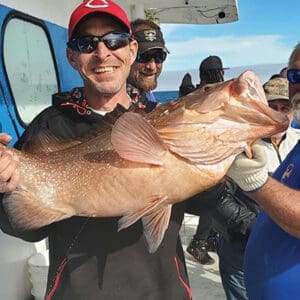
Capt A 34 Inch Red GrouperWhat a summer! Thank you to all who ventured out to fish and take advantage of all the great activities here in the Grand Lagoon area – great food, great fishing, and great water sports!

But wait! There’s more! “As the temperatures cool down from the 90’s and the water begins to cool down, fishing becomes even better!” says Capt. Mike Sullivan, owner of Capt. Mike, Capt. Hank and Lady S charter boats. He should know! He is one of the best charter boat fishermen in Bay County.

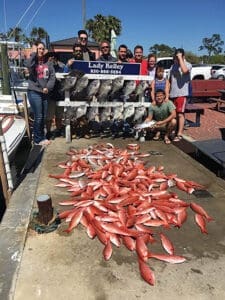
Capt A Private Charter Beeliners&triggerfish 2018Triggerfish, Red Grouper, and Amberjack are being caught offshore, especially Triggerfish (you know that very ugly fish that is so delicious?)

Mahi Mahi, or dolphin (fish not porpoise), as well as King Mackerel are plentiful trolling near the coastline, about five to six miles out.

Fall is a great time to visit PCB to fish, to golf, and just enjoy the outdoors – what could be better for you to fight off all those pesky viruses that seem to be hanging around?!?

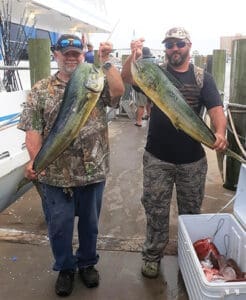
Capt A Twin MahiFolks are still encouraged to take precautions to protect themselves and their families – hand washing, social distancing, and masks, if you prefer, in inside areas. When sick, stay home. But we don’t live in fear here. We do our best to protect you and our staff; be smart but enjoy your freedoms! Sunshine is the best natural medicine so we hope you will come and enjoy it!

Some events have been cancelled in our area or ‘gone virtual’ like the Pirates of the High Seas Festival in October. The PCB Fishing Rodeo is still on! We are adjusting our ‘Kids Day’ activities to protect all who come; updates will be on the website at pcbeachfishingrodeo.com.

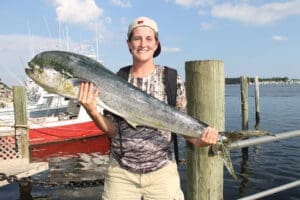
Capt A Mahi 6 15Speaking of the Rodeo, here is a message from the PCB Fishing Rodeo Tournament Director, Joe Laymon!

Wow, Panama City Beach, Bay County, and the surrounding area has been eagerly awaiting this Fishing Tournament. Over the past few years, I have had the privilege of talking with several Boat Captains and First Mates regarding fishing tournaments and lack thereof in our area. Most people remembered the Billfish annual tournament and how much fun that tournament was. Over the course of several conversations we quickly discovered a demand for a sizable fishing tournament for this area in a BIG WAY! Following all the chatter we decided to get a little more serious and make it happen!

We are excited to bring to you the PC Beach Fishing Rodeo. This tournament is a three weekend, 17-day event with two weigh-ins daily from 12 p.m. to 2 p.m. and 4 to 7 p.m. from Sep 24 to Oct 10, 2021. Check it out at pcbeachfishingrodeo.com!

You can also find more info on all the great opportunities in the Grand Lagoon area at www.grandlagoon.com.

When planning your fishing trip, remember Capt. Anderson’s Marina… home of three large headboats, 35 private charter boats, and four dive boats… and Shell Island/Dolphin Cruises.

Capt. Anderson’s Marina…Where the fish are always biting and the kids are always smiling. www.captandersonsmarina.com.

Kwiker Liquor: Copper Cane Wine & Provisions

At Kwiker Liquor, we know that the key to having a great selection of fine wines is knowing a great selection of Vintners and Winemakers. We take pride in cultivating these relations to bring the very best to our customers in the Panhandle. This month we called on our friends from Copper Cane Wine & Provisions to share their story.

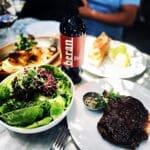
Copper Cane Table 2Genuine Craftsmanship for Everyday Indulgence, Born in Napa Valley California
With a focus on innovation and genuine craftsmanship, Copper Cane Wines & Provisions houses a collection of brands that are crafted to offer a touch of luxury for everyday indulgence. The current portfolio includes: Elouan Pinot Noir from Oregon, Belle Glos Pinot Noirs from prime California coastal vineyards, Beran Zinfandels of California, Carne Humana Red and White Blends from Napa Valley, and Steorra, a Brut Sparkling wine made of Chardonnay and Pinot Noir grown in Sonoma County’s prestigious Russian River Valley.

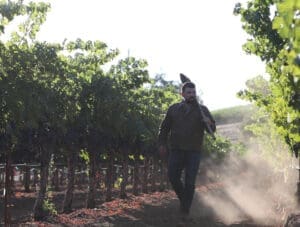
Coppercane ShovelJoe Wagner. Owner and Winemaker
Joseph is a fifth generation Napa Valley winemaker with a dedicated passion for the business. Joe’s roots in the winemaking began at an early age. His family founded Caymus Vineyards in Napa Valley.

In 2001 at age nineteen, he rolled up his sleeves and has yet to look back. His passion and natural talent for winemaking quickly became apparent after he started his own award-winning single vineyard Pinot Noir label, Belle Glos.

Coppercane Kick BackIn January 2014, Joe formed Copper Cane Wine & Provisions, with the goal of focusing on innovations that have always captured his interest, and to find new ways to offer the highest quality products that satisfy consumers’ appetites for genuine craftsmanship.

“We are driven by a passion for making wines that reflect innovation and genuine craftsmanship,” says Joe.

Strategies to Reduce the Impact of Taxes

Maurice StouseBy Maurice Stouse, Branch Manager and Financial Advisor

Many businesses and individuals in the world and America in particular are experiencing and benefiting from (in spite of the increased spread of the virus) a huge growth in the money supply, strong earnings, early retirements and the sales of their businesses. While there is much to acknowledge by the financial security these can bring, it also means considering the impact taxes can have. Add to that Washington has increased spending and increased tax plans on its current agendas.

When it comes to taxes and investing, there are three main strategies individuals might want to consider. Each has its own merits and distinguishes itself from the other. Any one or combination of the three may help address the accumulation of wealth and the preservation of it as well.

The three are: 1) Tax reduction strategies 2) Tax free strategies and 3) Tax deferred strategies.

Tax reduction strategies (for current and future tax liabilities for individuals and perhaps their estates). This involves charitable giving or moving assets out of their estates. Americans are among the most charitable people in the world and they can combine their philanthropy with reducing their current taxes with contributions directly to a charity of their choice (including churches, schools/universities and certain societal causes). Another way that is utilized and is an increasingly popular strategy of Donor Advised Funds (or DAFs). And some, depending on resources they have, might even establish their own private foundation. The impact is that it reduces (within certain limits) income taxes for the current year while also fulfilling their support for the causes they care about. There are also tax reduction strategies that can impact current and future taxes by utilizing things like Charitable Remainder Trusts (CRTs), Charitable Lead Trusts (CLTs). And some may be looking to get assets out of their estates to address the tax burden for their heirs (so no current tax savings for them) and utilize things like Spousal Lifetime Access Trusts (SLATs).

Tax free strategies focus on those investments where income is not taxed federally (and in some states as well). These can help reduce current taxes particularly in a year where income may be surging. The main investments available in this case are municipal bonds or municipal bond funds or exchange traded funds. Many of these are considered more conservative (and hence not growth oriented) investments and pay monthly, quarterly or semi-annual tax-free income. Social security recipients should take note that the income while not taxable does go into their earnings calculations. Lastly, certain retirement accounts like the ROTH IRA, when certain requirements have been met by the holder, might deliver tax free income (post 59 ½ years old and after a certain waiting period for owners or beneficiaries) for life.

Tax Deferred Strategies. Many Americans do this at every paycheck by contributions to their 401ks, 403bs, SIMPLE (Savings and Incentive Match Plan for Employees) plans or SEP plans. These contributions not only reduce your current taxable income but they also can grow on a tax deferred basis (without annual taxes on growth, capital gains or any income they produce). In theory that means the investments have an advantage to taxable investments. Of course, on the other end, when distributions are made, those distributions are taxed, at that time. Tax deferred strategies for IRAs have current contribution limits of $6000 per year ($7000 if over 50 years old). For 401ks that can mean contributions of up to $19,500 ($26,000 if over 50) with a total annual maximum of $63,500 given certain limitations from their salaries and those plans that involve a company contribution through a profit-sharing plan to add to that. SIMPLE plans work similarly but with lower limits (and might be attractive to small companies). There are merits and considerations for SEP plans as well. Lastly, some people, particularly in their 50s or 60s might be wanting or needing to catch up on retirement savings and there are plans such as Defined Contribution Plans (DBPs) where the individual can potentially contribute 100% of their earnings within limits. Those plans currently would max out at $230,000 per year in contributions. It is important to seek professional tax planning assistance when considering any of these.

At The First Wealth Management, we encourage our clients to 1) concentrate to accumulate and then diversify to preserve 2) to monitor and make changes to their strategies over time vs overnight 3) consider the impacts that taxes can have on their savings and investments.

The First Wealth Management is located at First Florida Bank, a division of the First, A National Banking Association, 2000 98 Palms Blvd, Destin, FL 32541 with branch offices in Niceville, Mary Esther, Miramar Beach, Freeport, and Panama City. Phone 850.654.8124.
Raymond James advisors do not offer tax advice. Please see your tax professionals. Email: Maurice.stouse@raymondjames.com. Securities offered through Raymond James Financial Services, Inc. Member FINRA/SIPC, and are not insured by bank insurance, the FDIC, or any other government agency, are not deposits or obligations of the bank, are not guaranteed by the bank, and are subject to risks, including the possible loss of principal. Investment Advisory Services are offered through Raymond James Financial Services Advisors, Inc.

The First Wealth Management First Florida Bank, and The First, A National Banking Association are not registered broker/dealers and are independent of Raymond James Financial Services.

Views expressed are the current opinion of the author, not necessarily those of RJFS or Raymond James, and are subject to change without notice. Information provided is general in nature and is not a complete statement of all information necessary for making an investment decision and is not a recommendation or a solicitation to buy or sell any security. Past performance is not indicative of future results.

Investing involves risk and you may incur a profit or loss regardless of strategy selected, including diversification and asset allocation. Investors should consult their investment professional prior to making an investment decision.

Investing in oil involves special risks, including the potential adverse effects of state and federal regulation and may not be suitable for all investors.

Treasury Inflation Protection Securities, or TIPS, adjust the invested principal base by the CPI-U at a semiannual rate. Rate of inflation is based on the CPI-U, which has a three-month lag. Investing within specific sectors, or in small and mid-size companies, involves unique, additional risks. Those risks include limited diversification, regulatory risks, limited liquidity, and lack of operating history.

There is an inverse relationship between interest rate movements and fixed income prices. Generally, when interest rates rise, fixed income prices fall and when interest rates fall, fixed income prices rise.

Investors should carefully consider the investment objectives, risks, charges, and expenses of mutual funds before investing. The prospectus and summary prospectus contain this and other information about mutual funds. The prospectus and summary prospectus are available from your financial advisor and should be read carefully before investing.

Line Work

Sean Dietrich Murphy141704 1By Sean Dietrich

Morning on an American interstate. A caravan of large bucket trucks travels southward. There must be a hundred of them. Maybe more. These are utility workers.

Hurricane Ida plowed into Louisiana like a Peterbilt semi yesterday. These trucks are heading to ground zero to join the 25,000 other utility workers who are already in the Bayou State restoring power.

The trucks’ running lights are on. Their hydraulic lift buckets wobble from highway speed.
The men and women behind the wheels are preparing for weeks of sleepless nights, mechanical failures, possible accidents, wet weather, convenience-store suppers, cheap hotels, and video calls home—provided there is cell service.

A little boy in the backseat of a passing minivan with Florida tags waves at one of the truck drivers. The lineman waves back.

The boy’s mother cranes forward. She mouths the words “Thank you” in hopes that the utility worker can read her lips.

He can. He replies with a thumbs up.

And the convoy of trucks never stops coming. One by one they come. And one by one they should be thanked.

I live on the Gulf Coast. Hurricanes are part of our life. When Opal hit, for instance, it crippled us. And yet, amazingly, it only took 24 hours for hordes of electrical workers to arrive in our town and restore our power so we could all get back to watching daytime television.

The workers came from far-off places like Maryland, Texas, Ohio, or Pennsylvania.
My aunt was so grateful to the linemen working on her street that she brought them sandwiches each morning. Other neighborhood ladies made cookies and deviled eggs.

Elderly Miss Elaine made her infamous Green Jello Salad of Death. I would have warned the lineworkers not to eat the stuff, but it was too late.

And I’ll never forget when Hurricane Ivan smashed into our area a decade later. I was a newlywed, living in a one-bedroom apartment. Our building had no storm shutters, we were in a flood zone, emergency vehicle sirens blared, people screamed out for help, and I ran out of beer.

All anyone could do was cover their windows in duct tape and hide. Friends lost homes, cars, animals, trees. Ivan pommeled us like we’d insulted his mother.

Once again, the next morning, our little world was flooded not only with water, but with bucket trucks.

So yeah, whenever I see a parade of utility vehicles I get a little emotional. Namely, because these workers don’t have to be doing what they’re doing.

Utility crews have some of the most dangerous jobs in the world. Out of every 100,000 workers, 30 to 50 die. Some are victims of explosions. Others lose limbs or get burned. Electrical work is not for wimps. This type of labor is not a job, it’s a calling.

My friend Chad’s father is a retired lineman. Chad said he grew up going to too many funerals. His mother was always wondering if the next memorial service would be for his father.

“Whenever my dad would leave for storms, there was always that question of whether he’d come back to us in alive or in a box,” Chad recalls.

When Hurricane Michael hit a few years ago, I was out of town. One afternoon my hotel TV showed the eye of the storm making landfall 33 miles from my front door. The next morning, the national news showed images of a decimated Panama City, which is located in the county adjacent to mine.

I couldn’t believe what I was seeing on my screen. This was our Panama City. The same Panama City where we went shopping. The same Panama City where I once took Mary Herrington to ride roller coasters at Miracle Strip Amusement Park when she got food poisoning from a hot dog and ruined the interior of my ‘86 Ford.

Anyway, I left my hotel that morning and sped home. The only problem was, everyone else did, too. So I was stuck in a traffic jam stretching from the Panhandle to Seskatchewan. I sat in a cloud of exhaust for over six hours.

I will never forget when, at about midday, I saw orange flashing lights in my rear view mirror. A long line of bucket trucks was on their way to my Gulf Coast home. Diesels roaring. Earth rumbling. Cars pulled to the shoulder to let them pass.

It nearly made me cry.

I remember passing one particular truck in traffic later that afternoon. The driver was young, his window was rolled down. He was sunburned and as lean as a two-by-four. Music blared on his stereo. He spit into a Mountain Dew bottle.

At a red light, I rolled down my window and asked where he was from.

But he couldn’t hear me, his diesel engine was rumbling too loud. The young man just tapped his ear to indicate that I wasn’t getting through. So I shouted two familiar words of gratitude as loud as I could.

And it’s funny, even after all these years I find myself hoping this nameless young man could somehow read my lips.

But more importantly, I hope all utility workers in this country know how sincerely I am saying those same two words right now.

Back to School and Grateful

Husfelt 2020By Bill Husfelt, Superintendent, Bay District Schools

If I had to sum up our return to school with one word I would definitely choose “gratitude.”

As I have visited our schools, I have just been overwhelmed with the continued resilience of our students, the passion and dedication of our employees, and the support of our families. No doubt we’ve had challenges as we all adjust to new transportation guidelines, a new school on the beach, a new dress code, and other changes but I just could not be more proud of the way all of our stakeholders are working to support each other.
I am also grateful for all of the families who have entrusted us with the education of their students and for all of the support those families provide to our students, our employees, and our schools. It’s often said that “a rising tide lifts all ships” and that is so very true. Our schools do not make our students successful; it’s our students (and their families) who make our schools successful.

I sincerely hope that we’re able to navigate our way back to a semblance of “normal” this year because I know that’s what our students so desperately need. Although I can’t predict the future, I can guarantee that Bay District Schools will do everything we can to ensure our operations are as “normal” as possible and we sincerely appreciate ALL of the stakeholders who help us with that. The experts agree that we will be dealing with Covid-19 for at least the next two years so it’s critical that we all work together to keep our students and staff as safe as possible. Keeping your students home when they are sick is an absolutely vital component of our safety plan.

If you’re at all connected to our school system, I hope your family experienced as smooth a start to school as possible. Nothing is ever perfect and Covid-19 has certainly thrown us some curve balls but it’s a blessing just to be in school and I know many of you share that sentiment.

We may not be able to solve all of the problems because sometimes the resources simply aren’t available or don’t exist BUT we will always seek to do what’s best for our students. The personal, candid conversations I have every day with members of our community continue to remind me that Bay County is an amazing place in which to live, work and play and I’m so grateful to live in a community that cares so deeply for our children.

Gratitude … the more we practice it, the more we feel it. I’m grateful for all of you and I hope you continue to stay safe.

God Bless!

Gulf Beachfront Getting a Major Facelift

By Ed Offley

The world’s most beautiful beaches are about to get even better.

Beach SceneThree years after Hurricane Michael seriously eroded sections of the twenty-seven-mile Gulf beachfront, the U.S. Army Corps of Engineers is set to begin a $28.5-million beach renourishment project that will add approximately 2.1 million cubic yards of sand along the western and eastern ends of the beach.

“Right now, we’re looking at a startup date of September 9,” beach management consultant Lisa Armbruster told the Bay County Tourist Development Council at its monthly meeting on August 24. Current plans are for the dredging to begin on the county’s west end near Pinnacle Port, moving east to the Russell-Fields Pier at Pier Park. A second phase will then proceed west from St. Andrews State Park to the Ocean Towers condominium at the foot of Richard Jackson Boulevard. The central section of the beach was found not to be sufficiently eroded to require renourishment.

The dredging will increase the depth of the beach between tens of feet to over 100 feet depending on local conditions, Armbruster said.

Great Lakes Dredge & Dock Co. LLC, the prime contractor, will carry out the same procedure as done in four previous renourishment projects: A hopper dredge will lift sand from authorized “borrow areas” just offshore, then transport the material to a linkup giving access to a submerged pipeline running ashore that connects to a second pipeline running down the beach parallel to the water’s edge. The vessel will then pump a slurry mixture of sand and water to the beach pipeline where bulldozers will reshape the beach with the new material.

Beach surveys after Hurricane Michael in 2018 and Hurricane Sally in 2017 found serious erosion along the east and west ends of the beach. This prompted the Corps of Engineers to select the two sections of the beach that will receive renourishment. A separate $11-million renourishment project is planned for the Gulf beachfront at St. Andrews State Park during this same period.

Project planners estimate that once begun, the dredging operation will move along the beach at a rate of 500 to 1,000 feet a day. Working on a 24/7 nonstop schedule, the project is estimated to take between now and late January 2022.

Beachfront property owners and visitors will experience only a short-term disruption of beach access during the renourishment, according to Armbruster. As in previous dredging projects, the active construction area will be limited to a 1,000-to-2,000-foot area at any one time, and the contractors will build a “sand bridge” on either side that will allow beachgoers to cross over the pipeline to get to the water.

While the slurry mixture that fountains out of the pipeline will appear much darker than the white sugar sand Panama City Beach is famous for, once it dries out the new sand is identical to the beach itself.

The upcoming renourishment is the third largest of the five projects carried out along Panama City Beach, Armbruster said. A 1998-99 beach restoration – three years after Hurricane Opal savaged the area in 1995 – placed about 9.8 million cubic yards of sand along the entire 18.5-mile shoreline. In 2005-06, the Corps of Engineers contracted for a renourishment project adding 3.3 million cubic yards of sand to repair about 17.5 miles of damaged beachfront following Hurricane Ivan in 2004. Smaller renourishments in 2011 and 2017 were deemed “beach repair” projects adding sand to smaller areas where spot damage had occurred.

For more information and updates on the project go to the PCB web site at www.visitpanamacitybeach.com/things-to-do/beaches/beach-renourishment.

A Bonanza of Seashells Will Arrive With the Sand

By Ed Offley

When the hopper dredge begins pumping 2.1 million cubic yards of slurry along the gulf beachfront at Panama City Beach (see pcbeach.lifemediagrp.com/gulf-beachfront-getting-a-major-facelift/), it will do much more than replace the shoreline eroded by past storms.

It will also bring a bonanza for seashell hunters.
Shells2While the waters of the Gulf of Mexico abound with hundreds of species of mollusks, conchs, and bivalves, relatively few samples wash ashore because of tides and wave action, according to Linda Brunner, co-editor of Seashells of the Florida Panhandle (Colorside Commercial Printing, Roswell, Ga.).

“Strangely enough, the worst place to look for seashells is by the seashore,” Brunner explains. “Not many species live in that rough and tumble world, and those that do rarely wash up on shore in good condition except after strong storms.”

Beach residents who comb the beach regularly for sand dollars, Scotch Bonnets or various Murex species know that they are rarely seen amid the millions of shell fragments that have been pounded by tides and wave action. Moreover, it’s well known to longtime residents that several miles offshore the shallow water suddenly deepens, forming an underwater cliff that blocks many shells from being carried close to shore.

That’s where the Bay County Tourist Development Council, U.S. Army Corps of Engineers and dredging firm Great Lakes Dredge & Dock Co. LLC are coming to the aid of “shellers” along Panama City Beach.

If past beach renourishment projects are any clue, the slurry (sand and water mixture) that will be pumped ashore from the hopper dredge starting September 9 literally will coat the beach with an incredible array of pristine seashells that have long been resting on the bottom of the Gulf of Mexico.

Enjoy your shell hunting!

Subscribe to RSS
Secret Link