






















Spring is the time for frog calls, and here in the Panhandle, we have frogs. Most of us will probably hear more frogs than see them, but here are a few of our common frogs, just in case you see them. If you want to learn their calls, the Florida Museum at the University of Florida has a great website with calls. Frogs usually call when they are mating and they are usually mating in spring.
Terrestrial frogs live under logs, plants, and other cover, and have dry, bumpy skin. Terrestrial frogs include toads. All toads are frogs. Not all frogs are toads.
The most common toad in Florida is the Southern toad (Anaxyrus terrestris). They eat bugs and snails, and burrow into soil. They are common near either permanent or temporary freshwater and can be found on well-watered lawns in evening.
Most call in spring.
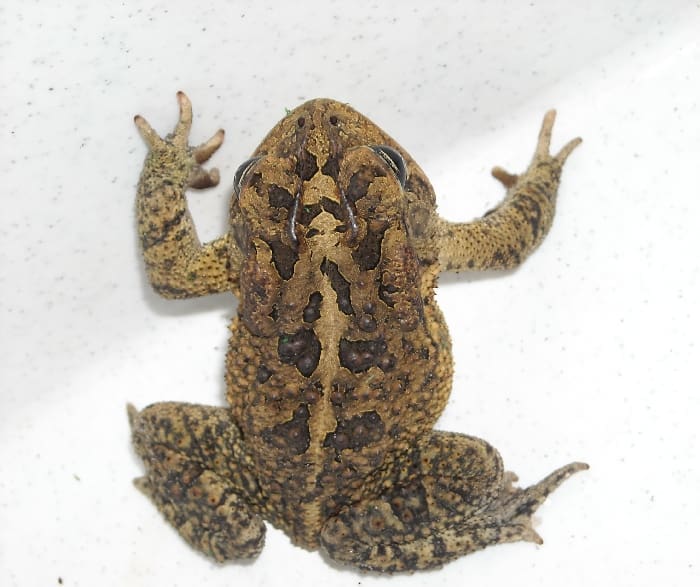
Eastern narrow mouthed toads (Gastrophryne carolinensis) are only about one inch long, but they have a really big call. They eat insects, including termites, and live burrowed in soil in sandhills, pine, oak and scrub forests, or roadside ditches. These toads are often found floating in swimming pools in the morning.

Arboreal frogs live in trees and have large, sticky, toepads for climbing.
Cope’s gray tree frog (Hyla chrysoscelis) is a quite common frog that is only about an inch long and can be gray, green, or brown, but all have bright orange inner thighs. They eat roaches and other insects, and live in hardwood forests near marshes, bogs and swamps, and in wet backyards.
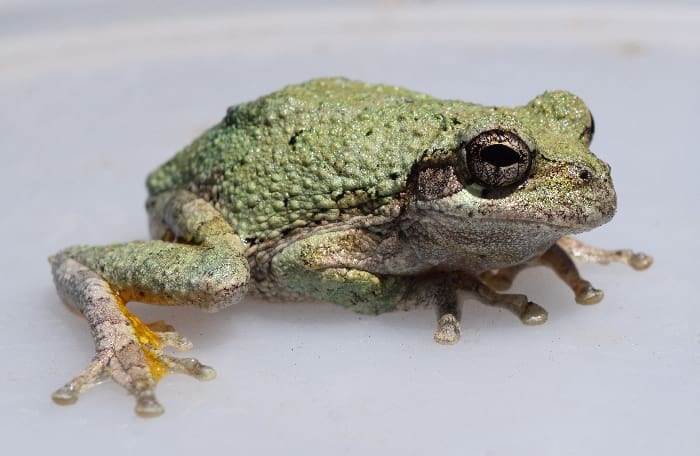
Green tree frogs (Hyla cinarea), although only about an inch long, eat stinkbugs and other invertebrates. They live in trees near permanent water bodies, even those with fish, including marshes, bogs, swamps, ponds, lakes, and ditches, and in urban areas. They are sometimes found on the side of houses, or at night, around porch lights, eating bugs. They have a white stripe down the side of the body.
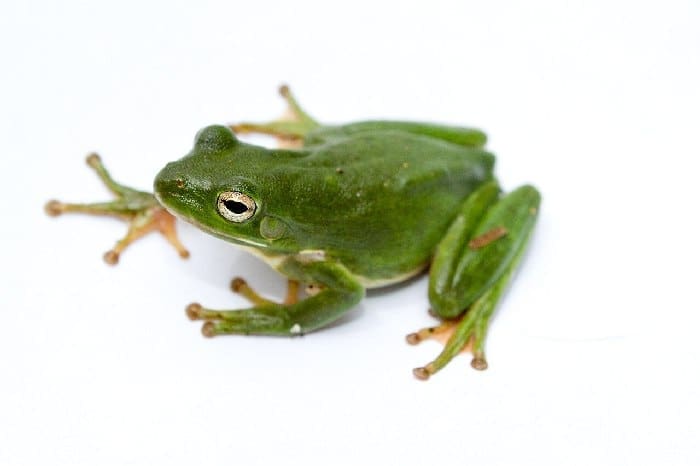
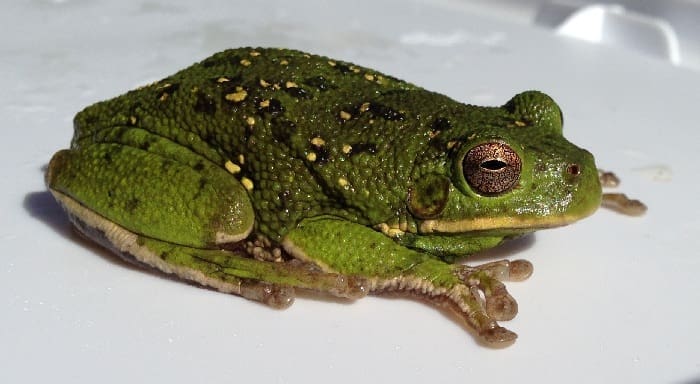
Barking tree frogs (Dryophytes gratiosus) can be gray, green, or brown. They live high in treetops or burrowed in sand. They breed in fish-free wetlands, such as bogs and ditches.
Barking tree frogs are large and colorful.
When barking tree frogs feel threatened, they inflate themselves, so they appear too large to swallow. Individuals live ten years.
Aquatic frogs spend most of their time in the water and have webbed toes.
Southern cricket frogs (Acris gryllus) can be green, gray, brown, or tan, with warty skin. They have a Y-shaped line on the back and a dark triangle on the head. Cricket frogs have tiny toepads and a pointed snout. They eat leafhoppers and other invertebrates.
Southern cricket frogs live in bogs, ponds, roadside ditches, lakes, and potholes. The call sounds like marbles hitting against each other. Even though they are aquatic frogs, they stay on shore. If they get scared, they will go in the water, but they do not put their heads in, and when the coast is clear, they come back ashore.
This is the call most often heard around ponds in the evening.

There are many more frogs here in the Panhandle. These are just a few of my favorites. The volunteer coordinator at FFWCC, Adam Lache, is coordinating a Frog Watch program which includes frog call workshops and field herp walks. Come join us! Enjoy the warm evenings and the calls.
Helen Petre is a retired biologist out there enjoying nature in the Panhandle. If you have any nature questions or suggestions for articles, email: petrehelen@gmail.com.
 RSS
RSS