






























By Helen Petre
Yes, we are! Winter has been cold and dreary, even though there was no snow this year. While wishing for warm weather, I read a book about Theodore Roosevelt and J.P. Morgan and their solution to the coal strike. I empathize with the cold, wet, mine workers. I am grateful that I am not a coal miner and I do not live in 1902.
In 1902, in the middle of the coal strike, Roosevelt had a state dinner for the King of Prussia to celebrate his new yacht. None of them had any idea things were not going to end well for Prussia or Germany, so they all had a great time being rich and spending money. World War I dissolved Prussia and the poor king was not a king anymore, however the state dinner was a fabulous success. They ate terrapin and ice cream, and Edith Roosevelt decorated the dining room with Smilax species vines (those briar kind of vines that grow up trees and everywhere). Smilax is the reason they make those jeans with the extra layer of jean on the front legs so foresters, and other people who crash through the brambles, don’t tear their jeans to shreds. Edith strung the vines from the chandeliers and light fixtures, and everywhere she could around her husband’s stuffed bears, elk, bison, and moose heads.
The state dinner was in February, so there was probably nothing else green in DC, however I think Edith is quite the genius, encouraging native plants in an environment of yachts and expensive cigars.
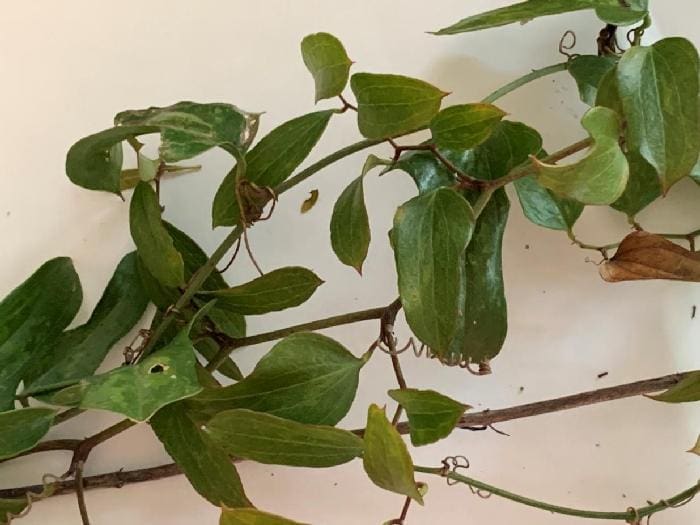
Smilax species. Edith’s decorative display for the state dinner.
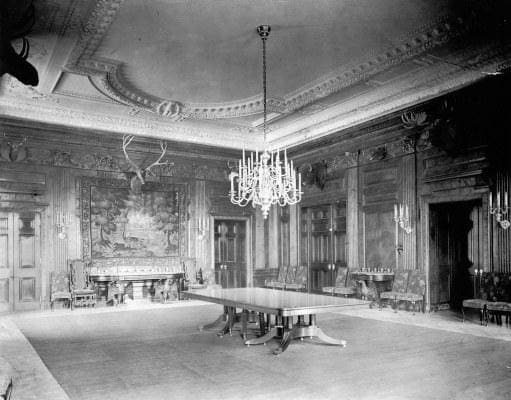 The Roosevelt dining room is minus Edith’s Smilax but complete with Theodore’s moose and elk. Library of Congress. https://www.whitehousehistory.org/white-house-tour/state-dining-room.
What’s Blooming?
Southern wax myrtle is just starting to produce flowering parts. This evergreen shrub smells like bayberry. It is dioecious, with separate male and female plants. Fruit forms on female plants and is food for turkeys and other birds. Wax myrtle fixes nitrogen more efficiently than legumes.
Wax myrtle (Myrica cerifera)
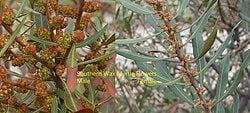
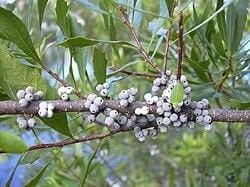
Male on right. Mature fruit bottom. Wikipedia.
American olive (Cartrema americana)
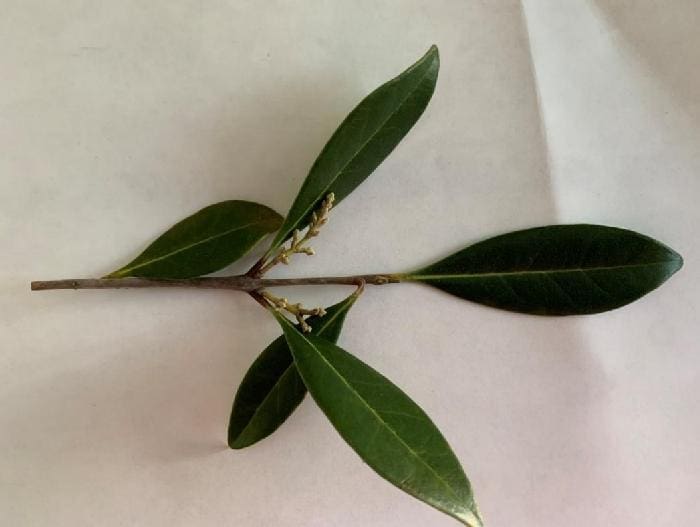
American olive starting to bloom.
Another dioecious, evergreen shrub that grows well in our sandy forests, American olive is just about ready to produce white, fragrant flowers, which will mature into blue black fruit in the fall.
Choctawhatchee sand pine (Pinus clausa immuginata)
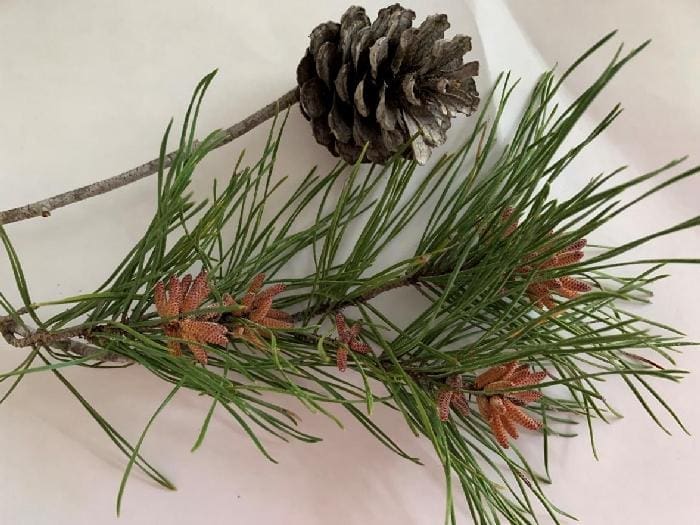
Choctawhatchee sand pine (Pinus clausa immuginata) Male on left.
It is the time of yellow pine pollen from all our pine trees, but especially from our native Choctawhatchee sand pine, which grows on marine, acid, sandy Entisol soils deposited during the Pleistocene.
Choctawhatchee sand pines grow only on the Panhandle between Pensacola and Panama City and nowhere else. All Choctawhatchee sand pines grow within one degree of latitude, on about 100,000 acres.
As with all pine trees, pollen forms on the male structures, which grow on the bottom half of the tree. Pollen is wind-blown up to the female pinecones at the top of the tree. Each scale of the female cone contains a winged seed. The female cones open when mature, without fire, but stay on the tree for what seems like forever.
Sand pines provide food and cover for birds and small mammals and make great Christmas trees.
Pine pollen, like goldenrod pollen, is way too big and heavy to cause allergies. It is advertised on Amazon for men, and you are welcome to buy it, but I am quite sure it does nothing.
Embrace our natives!
There are many other native trees, shrubs, and flowers getting ready to bloom as the weather warms. Here on the Panhandle, we are blessed with native plants and pleasant weather, dune lakes, and the Gulf of America, along with Smilax vines and pine pollen. Embrace nature and the natives. If Smilax is good enough for a White House state dinner for presidents and royalty, it is certainly good enough for us. Enjoy.
If readers have questions or suggestions for articles that concern science, nature, or wild things around the Panhandle, please email petrehelen@gmail.com.
Helen Petre is a retired USDA biologist and college biology professor. She spends her time volunteering, teaching, and writing science articles to share her interests with future generations.
 RSS
RSS