




























Home Blog Page 50

First Annual PCB Fishing Rodeo a Roaring Success!

By Pam Anderson

Whatever your flavor of fish or type of fishing you prefer, the PC Beach Fishing Rodeo has a place for you!
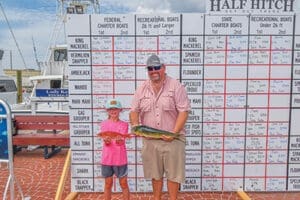
Andersons Marina 9.30.21.13Anglers from all over came daily to weigh in their catches September 24 thru October 10. From kayaks to private yachts to pier anglers, as well as Charter, Guide and Head-boats, participants came to see their fish weighed in and marked up on the leaderboard. Some were little guys, 8-12 years old, some were pretty salty, and one, Meredith McCord, a Professional Fly Angler, broke the world record with a 30.9 pound Amberjack (AJ) fly fishing!

Day one on September 24 started off with a bang, with a 70.2 lb. AJ brought in on Tail Hunter Fishing Charters as well as an 11.9 lb. Gag Grouper. The Kelley family stepped up bringing in a 20.9 lb. King Mackerel on the Kelley Girl, a 2.6 lb. Vermilion Snapper on the Miss Kelley, and a 23 lb. Blackfin Tuna on the Lady Kelley.
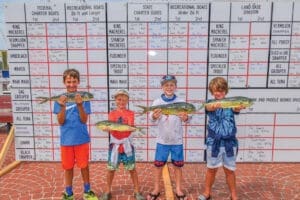
Andersons Marina Tarpon DockThat set the stage for the rest of the tournament; anglers from all over Bay County began bringing in their catches and filling the leader board.

As of this writing, these are the top catches in each of the categories from daily listings:
Day 1: Amberjack (Rod & Reel) 70.2 lb. caught on Tail Hunter Charters by Jared Tidmore
Day 6: Yellow Edge Grouper-6.8 lb. caught on the Pegasus by Leslie Alford
Day 7: Gag Grouper – 38.6 lb. caught on Chances R by Blake Ingram
Day 8: Scamp – 6.3 lb. caught on the Great Escape by AJ Ashley
Day 9: King Mackerel – 36 lb. caught on Perra Mala by Lance Rucker
Day 11: Vermilion Snapper- 5 lb. caught on Heritage Excursions by Mason Hall
Day 11: Blackfin Tuna-25.3 lb. caught on Heritage Excursions by Tyler Mercer

Top catches in categories not on the Daily Winner List are:
Mahi-mahi – 9.1 lb. caught on the Chances R by Chad Spradlin
Wahoo – 49 lb. caught on the Kelley Girl by Sam Hacker
Red Fish with 9 spots caught on the Catch um’ Up by Pete Turner

Daily catches as well as all categories are listed daily on our website at www.captandersonsmarina.com as well as www.pcbeachrodeo.com and both Facebook pages. Lots of pictures and winner listings will be up throughout October.
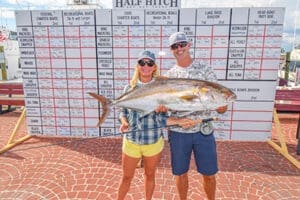
Andersons Marina Chasin The SunChasin’ the Sun Fishing Show also has highlights from the event. Speaking of which, we want you to know just how impressive that catch was for Professional Fly Angler Meredith McCord. Her 30.9 pound Amberjack was not only caught fly-fishing, but on an 8 lb. test line with a size 2 hook! Now that is impressive. Congrats to Meredith on her record-breaking catch!

Our final winners will be posted by the time you receive this issue of PCB Life. Be sure to see if your angling friends made it to the finals!

The Grande Finale & Awards Ceremony weekend, October 9-10, featured great family fun for all. Besides the great Awards Ceremony, there was a day of Reel Kids Fishing Rodeo sponsored by the Reel Ladies of PCB, a Pirate Party with the Pirates of the White Sands, Puppy Costume Contest, Live Entertainment by Will & Lindsey Thompson, and, of course, Grand Lagoon Fireworks presented by Visit Panama City Beach and a whole lot more!

We thank our many sponsors, the TDC, and local fishing organizations for their support this year. Many are already signed up for 2022! Private anglers get ready!

If that isn’t enough good news… red snapper season re-opens for federally permitted head-boats and charter boats October 15 through November 5 at midnight. Reserve early on your favorite charter or head-boat for this added season for red snapper.

When planning your fishing trip, remember Capt. Anderson’s Marina… home of three large head-boats, 35 private charter boats, and four dive boats… and Shell Island/Dolphin Cruises.

Capt. Anderson’s Marina…where the fish are always biting and the kids are always smiling.
PCB Chamber Spotlight: Lamar Advertising

By Claire Sherman

A simple flip of the coin in Pensacola, Florida, landed Charles W. Lamar Sr. the opportunity of a lifetime. In 1908, when Mr. Lamar and J.M. Coe decided to dissolve their business partnership, a coin toss was used to divide their assets which included the Pensacola Opera House and the Pensacola Advertising Company, a small poster company created to promote the Opera House. Mr. Lamar lost the toss and was left with the less-lucrative poster company, which was later renamed Lamar Outdoor Advertising Company. Over the course of the next century Mr. Lamar and his descendants built Lamar Advertising from a small sign company on the Gulf Coast into one of the largest providers of Out-of-Home advertising in the nation. Lamar Advertising (Nasdaq: LAMR) with over 351,000 displays across the United States and Canada, offers advertisers a variety of billboard, interstate logo, transit and airport advertising formats helping both local businesses and national brands reach broad audiences every day.

Locally Lamar has been operating on and off in the Panama City market since the 1930s leasing sign sites, constructing billboard displays, and selling space to advertisers. In addition to its traditional Out-of-Home inventory, Lamar also offers its customers the largest network of digital billboards in the United States.

After the devastation of Hurricane Michael, Lamar had the unique opportunity to rebuild the Bay County market, with the vision to build a prototype “market of the future” featuring state-of-the-art digital displays and modern advertising opportunities. Lamar Advertising of Panama City now offers 54 digital billboards and more than 500 premium static billboards in Bay County and the eight surrounding counties.

One of the greatest advantages offered by billboards is the ability to have a constant presence 24 hours a day / 365 days a year. Billboards can’t be turned off, tuned out, ad blocked, or thrown away. Advertising messages work for you all day, every day to reach consumers. With over 550 billboard locations in the Panama City market, Lamar can find the board or grouping of boards to hit any target audience.
Lamar Img 9284
Lamar Advertising of Panama City has been operating under the leadership of General Manager Claire Sherman for the past 14 years. Claire started with Lamar in 1997 as an Account Executive, before being promoted to Sales Manager and then VP / General Manager. She is extremely active in the community having served on numerous boards, in multiple leadership positions, and on the Board of both Chambers. Moreover she is proud of her Lamar family and co-workers. Building strong relationships, providing excellent customer service and delivering value to the customer is what Claire and her team aim to provide every day. “We live by the Golden Rule, and we operate with honesty and integrity in every aspect of our business.”

Do you want to break through the clutter and magnify your voice to your consumers? Do you have commercially zoned property and want an additional revenue source? If you answered yes to either of these questions, give us a call: (850) 763-6617 or visit www.lamar.com/PanamaCity.

Learning in Many Languages: Bay District Schools Leads the Way

Husfelt 2020By Bill Husfelt, Superintendent, Bay District Schools

With more than 1,200 English Language Learners (ELL students) speaking approximately 33 different languages, it’s safe to say that Bay District Schools really is a melting pot of students from throughout the world. No where is that more evident than at our schools at the beach which are seeing a huge influx of students who speak languages other than English.

To help us address the needs of these students, we have five “Newcomer Programs” designed to welcome students who speak little to no English and to help them assimilate into their home-zoned schools. Currently, due to a very high demand, the program at Hutchison Beach Elementary School is closed due to capacity enrollment as is the program at Lucille Moore Elementary School.

The other three programs (at J.R. Arnold High School, Bay High School and Jinks Middle School) still have capacity for a few more students.

In August of 2020, we opened our Multilingual Resource Center to assist families moving to our area. At the center, new students are registered, tested, and placed at the schools that can best meet their needs. Bilingual staff members assist every school with interpreting/translating for parent meetings, registration and other school events.

Resource Center staff members also provide translation support to every department in BDS including Homeless, Wellness, Transportation, Pre-K, Bay Base, Homeschool/Virtual School and Media Services. The bilingual staff members also provide services to community agencies such as the Gulf Coast Children’s Advocacy Center, The Florida Department of Health in Bay County, Child Find/Headstart, and PanCare.

While translation services are some of the most popular resources we provide to these agencies, our resource center also provides emergency food and clothing when we can to ensure families have what they need for their students.

An increased enrollment in the ELL program has also translated into the need for additional bilingual staff members. Currently, we have 28 full-time bilingual paraprofessionals and we have six schools with vacancies. We also have three full-time resource teachers who visit schools to support teachers with professional development and instructional strategies. Our resource teachers are available to help their colleagues by modeling lessons designed to meet the unique needs of students who are ELLs.

All of our schools are doing an excellent job of working to meet the needs of ELL students but I have to give a huge shout out to our schools at the beach where we’ve seen the biggest influx of new ELL students and immigrants.

Currently, the staff at Hutchison Beach Elementary School are taking care of 111 ELL students which is an immense responsibility for their staff members. Many of these students don’t speak any English at all!

Not only are those teachers trying to teach these students to speak English but they are also being held accountable by the state for on-grade-level instruction for students who may not have attended school regularly in quite some time. Additionally, many of these students suffered immense trauma in their journeys and so our mental health experts are always on call to help the students, and their families, address these challenges.

But Hutchison Beach Elementary isn’t the only school on the beach seeing an influx of ELL students. Our newest school, A. Gary Walsingham Academy already has 15 ELL students while West Bay Elementary School has 25, Patronis has 28, Surfside has 31, Breakfast Point has 49 in elementary and middle school, and J.R. Arnold has 46 students who qualify as ELL.

Most people probably assume, correctly, that the majority of our ELL students speak primarily Spanish. What people probably don’t realize, however, is the amazing diversity in the languages spoken by the rest of our ELL students. Currently, to name just a few, we have students who speak Gujarti, Mandarin, Russian, Thai, Vietnamese, Urdu, and Arabic. Together, these students speak 33 different languages!

We take great pride in doing all we can to welcome our ELL students, and their families, and to ensure they all experience a smooth transition into Bay District Schools. By using all available technological resources, we endeavor to translate our materials into every language possible to ensure our families have what they need. Additionally, our website automatically translates into six languages other than English which is a great support for our students and their families.

We appreciate the assistance of all of the businesses and community members who continue to help us gather supplies needed to help ALL students and the families during these difficult times. We know the power of public education in our community, in our country and in the world and we’re excited to help all of our new families find a home in Bay County and a safe place for teaching and learning in Bay District Schools.

Stay safe and God Bless!

September and October Have Historically Been the Most Volatile for the Stock Market

Maurice StouseBy Maurice Stouse, Financial Advisor and Branch Manager

We often get the question or the comment regarding a market correction or worse, a bear market. We also take note that, historically, many corrections have been made in September and October. Why that is so is the subject of speculation. Most folks are focused on now vs. the past of course and with the market having rallied for over a year now and multiples at historical highs, people are beginning to wonder.

While market corrections can happen at any time, we would even suggest that by the end of the day this article is being written, a correction could take place. Investors, understandably so, want to know if a market selloff is about to happen. The problem, at least in our experience, is that they don’t ring a bell at the top, signaling people to get out and they don’t ring a bell at the bottom signaling for people to get back in.

We feel investors should pay close attention to key drivers in asset valuations:

First, The Federal Reserve balance sheet. It has more than doubled in the past year and a half and is up tenfold since 2008. The current amount is $8.357 trillion as of September 8th (see federalreserve.gov/monetarypolicy).

The Fed’s balance sheet is made up on the asset side of Treasuries and mortgage type securities that it has purchased on the open market. The more The Fed buys, the more money or monetary stimulus, is released into the U.S. financial system. Where does The Fed get the funds for those purchases? Typically, it is through creating or “printing” more money. There are several factors that drive asset prices, and we feel that in this environment, the key driver is the growth of the balance sheet. So, as investors’ worry grows over market corrections, keeping an eye on the balance sheet is a good indication of the amount of liquidity that exists in the financial system. The greater the liquidity, the greater the support for asset prices. If liquidity is withdrawn (through tapering as an example) that, in theory, means less stimulus and potentially less liquidity. That might mean asset prices could become more volatile.

Second is the yields on the benchmark U.S. Treasury as another significant factor that drives markets and or adds to or lessens volatility. We suggest that our clients pay most attention to the yield on the 10-year U.S. Treasury bond. Why? That is what most professional investors and market followers focus on. The yield right now is approximately 1.35%. Note the yield on the S&P 500 is very close to that. So, if the yield climbs significantly, we think (from what we have researched and concluded) to approximately double the yield of the S&P 500, that in and of itself would be a trigger or drag on stock prices.

Third, we continue to be wary of bonds and the implications yields can have on them and potentially the stock market. Should clients desire to invest in that area, we express caution as we feel that climbing yields (because of inflation, an increase in the supply of Treasuries for sale as examples) would continue to put pressure on investment grade bond prices. Inflation’s most recent reading is 5.3% year over year (it was 5.4% when reported last month). We would suggest investors consider high yield bonds or floating rate bonds in an economic environment such as this. While those carry greater quality risk, they might fare better than their investment grade counterparts.

Finally, and always, at The First Wealth Management, we encourage our clients to 1) concentrate to accumulate and then diversify to preserve 2) to monitor and make changes to their strategies over time vs overnight 3) consider the impacts that taxes can have on their savings and investments.

The First Wealth Management is located at First Florida Bank, a division of the First, A National Banking Association, 2000 98 Palms Blvd, Destin, FL 32541. Branch offices are located in Niceville, Mary Esther, Miramar Beach, Freeport and Panama City. Phone 850.654.8124.

Raymond James advisors do not offer tax advice. Please see your tax professionals. Email: Maurice.stouse@raymondjames.com. Securities offered through Raymond James Financial Services, Inc. Member FINRA/SIPC, and are not insured by bank insurance, the FDIC, or any other government agency, are not deposits or obligations of the bank, are not guaranteed by the bank, and are subject to risks, including the possible loss of principal. Investment Advisory Services are offered through Raymond James Financial Services Advisors, Inc.

The First Wealth Management First Florida Bank, and The First, A National Banking Association are not registered broker/dealers and are independent of Raymond James Financial Services.

Views expressed are the current opinion of the author, not necessarily those of RJFS or Raymond James, and are subject to change without notice. Information provided is general in nature and is not a complete statement of all information necessary for making an investment decision and is not a recommendation or a solicitation to buy or sell any security. Past performance is not indicative of future results.

Investing involves risk and you may incur a profit or loss regardless of strategy selected, including diversification and asset allocation. Investors should consult their investment professional prior to making an investment decision.

Investing in oil involves special risks, including the potential adverse effects of state and federal regulation and may not be suitable for all investors.

Treasury Inflation Protection Securities, or TIPS, adjust the invested principal base by the CPI-U at a semiannual rate. Rate of inflation is based on the CPI-U, which has a three-month lag. Investing within specific sectors, or in small and mid-size companies, involves unique, additional risks. Those risks include limited diversification, regulatory risks, limited liquidity, and lack of operating history.

There is an inverse relationship between interest rate movements and fixed income prices. Generally, when interest rates rise, fixed income prices fall and when interest rates fall, fixed income prices rise.

Investors should carefully consider the investment objectives, risks, charges, and expenses of mutual funds before investing. The prospectus and summary prospectus contain this and other information about mutual funds. The prospectus and summary prospectus are available from your financial advisor and should be read carefully before investing.

Ask Apex: Water Damage

Ask Apex: Water DamageBy Jeremy Neel

Dear APEX,
I am a local property manager, and I have dealt with several different restoration companies in my career. I am curious to know why some companies only install drying equipment, and others remove damaged material from the properties before installing equipment? Can you help me understand the process for future reference? ~ James A.

Dear James,
We appreciate your question, and we will do our best to make the most sense out of an issue that has several determining factors. Let us start by first pointing out that every damage situation (loss) has many different variables that determine the correct approach. For professionally trained restoration companies, the first variable that needs to be assessed is the type of water that has affected the property. In the restoration industry water is divided into three separate categories: Category 1, Category 2, and Category 3. By IICRC (Institute of Inspection Cleaning and Restoration Certification) S-500 standards, the following is the breakdown of the three categories:

Category 1: This is liquid from a clean and sanitary source, such as faucets, toilet tanks, drinking fountains, etc. However, Category 1 can quickly degrade (within 24-48 hours) into Category 2.

Category 2: This category of liquid used to be called “grey water,” and is described as having a level of contaminates that may cause illness or discomfort if ingested. Sources include dishwasher or washing machine overflows, flush from sink drains, and toilet bowl overflow containing no feces.

(Please note that Category 1 water, when traveling through building materials is automatically elevated to a Category 2 level due to potential contaminants within the building materials themselves.)

Category 3: This is the worst classification and is grossly unsanitary. It could cause severe illness or death if ingested. It used to be called “”black water, and sources include sewer backup, flooding from rivers or streams, toilet overflow with feces, and stagnant liquid that has begun to support bacterial growth.

It is important for you to know that a thorough restoration contractor will do on site testing to determine which category of water is affecting the individual loss. Once the determination has been made, it is time to move forward in saving the materials that can be saved and disposing of those that could potentially cause harm. Should Category 3 be determined, it is recommended that all affected materials be discarded. In a Category 2 scenario, it is recommended for drywall, carpet pad, and any wooden materials made of pressed board be removed and discarded. If Category 1 is determined, it is to everyone’s benefit to minimize further damage to the property by attempting to dry wet materials without removal.

The second variable to assess is the construction materials, components, and methods of installation. While some materials may be resilient, such as tile flooring, the method of installation could give a false sense of security with regard to long term damage and potential health risks. For example, if tile is installed directly on top of concrete, the potential problems are minimal. If the same tile is installed directly on top of a wooden subfloor, the risk becomes elevated as water can become trapped between the layers of building materials and can create the perfect breeding ground for mold growth and structural issues such as rot.

As you can see it is very helpful to have a basic understanding of construction methods when it comes to restoring a water damaged property. Of course, there are numerous variables that have to be considered on every loss simply because every loss is different. We hope we’ve given you some insight on how professional restoration contractors make decisions when it comes to water damaged properties.

Feel free to contact us for further information. If you have any questions regarding any property damage related to water, fire, mold, or storms and would like us to answer it in our monthly column, please call us anytime at (877) 307-3088.

Medicare Open Enrollment is Here. Now What?!

greg duretteBy Greg Durette, Florida Health Connector

It’s finally here again—Medicare Open Enrollment or more precisely, the Annual Election Period (AEP). Every year, from October 15th to December 7th, Medicare eligible folks are able to do pretty much anything they want with their coverage. Some of my previous columns have addressed many of the details of those options but, simply put, you can add, drop or change virtually any plan and change to or from any insurance company.

Piece of cake right? Wrong! The reason is, many folks do not want to relive the information overload they experienced when first becoming eligible. Remembering the volume of phone calls, emails and mountains of regular mail would understandably send anyone running for cover!

Please know, this time will be different. First of all, you now have had some time to experience what the plan you originally selected can or cannot do for you. Were you happy with the premium? Were all your doctors in the network? Were all your prescriptions covered at a reasonable cost? Did you get any of the extra benefits like Dental, Vision, Hearing, Tele-Health, At Home Care, Caregiver Support or Over-the-Counter cash allowances?

If the answer to any of these is no, then now is the time for you to get answers so you can make the right choices for 2022.

The problem for many folks becomes, where can they get this information without re-igniting the aforementioned onslaught? The answer – YOU need to initiate contact. That means calling your current agent or broker and/or finding other sources of information.
Calling Joe Namath will likely cause that onslaught to re-ignite as the company he represents simply gets you to call so they can SELL your information to some agent willing to pay to get access to you. In fact, many of these types of advertisements do exactly the same thing. Call them all and get ready to buy the jumbo size mailbox and voicemail box!
Instead, look for advertising from local folks you know will be able to get you what you are looking for. They WON’T SELL your information to strangers. This simple tip will allow you to rest assured, you will not be overwhelmed again.

Once you have decided which person or place to call, do it. But, be ready to answer a few questions about what you currently have, what you are paying (some plans can be as little as $0 per month!) and what it is you would like to improve or change with a new plan. Also, make sure you are ready to answer questions about your doctors and prescriptions so you can make sure what you are moving into will provide you with all you expect. You are looking for no surprises. So, also have a few questions of your own!

The bottom-line message is this; be not afraid. This time of year, (AEP) is designed to help you make improvements, not make you relive the trials and tribulations of your initial enrollment.

Reach out and look to how you can possibly make things better for you. Your health might change from year to year, but your need for excellent health insurance remains a constant.
Follow these simple steps and make 2022 your best health insurance year yet!

Greg Durette is a qualified, licensed agent with Florida Health Connector providing Medicare throughout the State and is based in Niceville. He has been in the insurance industry for over 38 years and can be reached at his office at 850-842-2400 or his mobile at 978-509-2941.

Miles of Trails Await at PCB Conservation Park

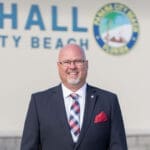
Pcb MayorBy Mayor Mark Sheldon

Every community, if it is lucky, has one – that hidden gem that takes you a bit by surprise.
The beauty and attraction of our sugar white sandy beaches and emerald green waters have garnered us attention as one of the World’s Most Beautiful Beaches. But Panama City Beach has more. The City’s unexpected place is easily the City Conservation Park.

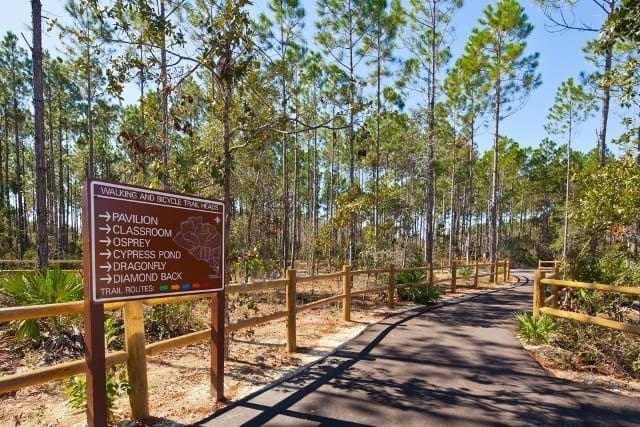
Think 24 miles of winding trails through 2,900 acres of wetlands and pine forest where hundreds of species of flora and fauna can be found. Think a paradise for walkers, joggers, bicyclists and dog owners. And entry is free.

Residents and visitors alike love Conservation Park because it not only provides numerous recreational opportunities, but also because of its role in protecting West Bay by serving as a reservoir for treated wastewater. This makes it a true haven for nature lovers.
Conservation Park
Over the course of less than a year, park staff have observed 11 species of reptiles and amphibians, most notably the gopher tortoise, a state-listed threatened species.

A rare plant survey was conducted several years ago, noting that habitats within the park historically could support more than 50 federal-and state-listed plant species including native plants and longleaf pines. At least seven state-protected species have been documented at the park.

The Bay County Audubon Society has helped put together a comprehensive list of birds. Bird species observations and counts are conducted on a regular basis. Data collected by volunteers and bird enthusiasts is recorded on www.eBird.org. This data, listing 171 different species of birds, distinguishes the park as a “hotspot” for bird watchers.

The local Audubon Society hosts four Bird Walks each year at the park beginning at 7:30 on Saturdays. Upcoming events are scheduled for December 11, February 12, and March 12.
The park also hosts special events like birthday parties, reunions, field trips and weddings.
In many ways, the Panama City Beach Conservation Park is a laboratory that blends fun, environmental awareness, science, and sustainability in the great outdoors. Especially during a pandemic, the Conservation Park has provided a perfect respite for our residents and our visitors.

What better time to get out and enjoy the great outdoors in this peaceful, out-of-the way setting, than the fall? The temperatures are beginning to cool off and the number of visitors to our city is tapering off. This is a great time to be outside.

The Conservation Park is open year-round from sunrise to sunset. All dogs must be leashed. Picnic tables and an outdoor classroom are also on site, along with a large parking lot and bathroom facilities. There is a refillable water station here as well, and visitors are encouraged to bring water and a snack.

Several improvements are planned for the park in the coming months including construction of a park office/meeting room and additional signage that would include user-friendly digital QR codes that could be scanned along the trails for location and educational purposes.

The park is located at 100 Conservation Drive. To get there, take Panama City Beach Parkway and turn north on Griffin Boulevard, west of State Road 79. Travel approximately 1.5 miles north and the road dead-ends at the park.

Breast Cancer and Hormone Therapy

Dr Chern PhotoBy Dr. Richard Chern, M.D.

The Women’s Health Initiative Study (WHI) was started with the goal to prove that synthetic hormones worked as well as bio-identical hormones. Unfortunately, the results of this study were announced in a way that scared most women and physicians into stopping hormones of any kind with the belief that all hormones cause cancer, strokes and heart attacks.

Unfortunately, this is not the case at all. The WHI study actually shows a reduction in cancer, strokes and heart attacks with the use of bio-identical hormones. The study showed an increase in cancer, strokes and heart attacks with the use of synthetic hormones. Of course, the news only reported on the frightening side of the study and told the world that hormones are bad. This led most women to getting off of their hormones with the idea that no hormones means no cancer. This could not be further from the truth.

Women who do not receive bio-identical hormone replacement after menopause have over a 16% risk of getting breast cancer. So, no hormones means more cancer. In fact, breast cancer, strokes and heart attacks are the top three killers of post-menopausal women. Why? Because of a lack of testosterone and estrogen are associated with increases in cancer as well as many other disease processes.

Women in the WHI study who received bio-identical estrogen replacement reduced their cancer risk to 6%. That’s a 10% reduction in breast cancer. In addition, a recent study of women who received bio-identical testosterone therapy showed more than a 50% reduction in their breast cancer risk.

There is no doubt that bio-identical hormone replacement therapy reduces the risk of cancer as well as many other diseases. If your doctor says otherwise, then he or she has not been keeping up with the times. In fact, the breast cancer study I am referring to was presented at the 2021 North American Menopause Society meeting in Washington, D.C., just this last month.

If you want to do everything you can to feel better and live longer after menopause (or even before menopause), then you should come see us today. We are able to get the proper full panel of labs and review them with you. Remember, normal labs are not necessarily optimal for your health. So, just because your doctor says everything is normal does not mean you are not at increased risk for cancer and disease.

Dr. Richard Chern, MD not only provides hormone therapy to men and women, but also teaches hormone therapy to doctors throughout the country. Dr. Richard Chern, M.D. is a platinum BioTE provider and runs one of the largest BioTE hormone clinics in the country in Miramar Beach. Call 850-837-1271 for an appointment.

Know Your Neighbor: Matt Standish

By Marta Rose-Thorpe

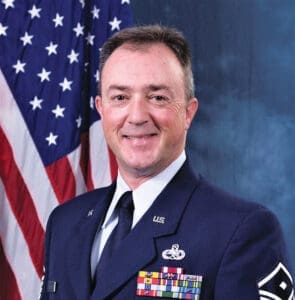
Matt StandishMatt Standish works for the Bay County Vet Center, a special office at the VA that helps Veterans and Troops suffering from post-traumatic stress. He is a member of VFW Post 2185 and AMVETS Post 2298, as well as president of the Veterans Task Force of Northwest Florida. He is also a Florida Freemason and a member of Harry Jackson Lodge #314 in Lynn Haven. “It is such an honor to be in a job where I am again taking care of the Troops,” he shares, “just like being a First Sergeant again, but without the headaches!”

Matt, his wife, Joni, and son, Zach, have lived in Callaway since December 2018 with their Beagle/Chihuahua mix, Lola Jean, and mostly Chihuahua, Bob, though he’s lived in Bay County, Florida, since 1994. He loves the proximity to Tyndall Air Force Base and all his military neighbors. Being near Tyndall AFB keeps him close to one of the focal points of his work with troops and veterans, helping them connect with resources and services to help with just about any need they may have. Seeing the progress and development here shows him that Callaway will be ready for the swelling population when Tyndall finally gets their F-35 fighter jets.

Matt joined the U.S. Air Force in April 1980, taking advantage of the only service to have its own college, the Community College of the Air Force, where he got his Associates in Applied Science in Aircraft Armament Systems. He started his 26-year career as a Weapons Loader, putting bombs, missiles, and ammo on fighter jets and performing maintenance on the weapons systems. After 21 years he gave all that up and crossed over to the dark side of the Air Force, becoming a First Sergeant, handling all the people issues and problems of his troops. It was the most satisfying experience of his career because of the many opportunities to make a difference in their lives.

“I’m originally from Tacoma, WA but am married to a Georgia Girl,” he shares. Matt loves trying local restaurants (and sometimes different, new places) like Millie’s, The Pour, The Place, Pizzaria Napoli, Salty Sue’s, Olle’s in Compass Lake, and El Jalisco, to name a few – though Joni is not quite as adventurous. He is a homebody and loves hanging out at home, dining on pork chops, Rice-O-Roni and salad, watching his favorite teams (Seattle Seahawks – NFL, Mariners – MLB, Chase Elliott – NASCAR) or his favorite TV show “Last Man Standing” and movie “The Fifth Element.” Zach prefers his video games. Matt loves wind therapy: he adores riding and working on his old Harley, enjoys cruise-ins with his Harley, and will watch most any kind of motor-racing. In his spare time you’ll find him doing book signings at farmers markets or hanging out with his dogs in dog parks. You will often find him with Lola Jean and Bob at Al Helms Dog Park on Balboa in Panama City. As a family tradition, he loves adding a new ornament to the tree each Christmas with the current year on it.

“My favorite daily activity is trying to make every person I meet smile!” he says. “You just never know how big an impact that one little random act of kindness might have!”

Let’s Get Growing with Julie: Beneficial Insects in Your Backyard

Julie Mcconnell Uf Ext 1By Julie McConnell, UF/IFAS Extension Bay County

Before I found myself working on a master’s degree in Entomology a few years ago I was like most people and saw little benefit in insects beyond pollination services. As I progressed through my studies, I learned about many other benefits insects provide in home landscapes such as decomposition, pest management, and as a food source for wildlife.

I have to say that as a gardener, I am most fascinated by the role of insects and spiders as predators. If you have ever tried to grow a specimen plant you likely have been frustrated by chewing or sap feeding damage on plants, but have you noticed how many other insects show up to feed on those plant feeders? Here are a few common ones and their pest management methods you should keep an eye out for in your garden.

Mantids – preying mantids are ambush predators that will eat any type of insect they can catch. They can camouflage themselves in vegetation, remain very still then quickly extend their raptorial forelegs to grasp prey.

Wheel bugs – this prehistoric looking large assassin bug has a very distinctive semi-circular crest on its thorax that resembles a cog wheel. Wheel bugs target soft bodied insects because they feed using a beak like mouth part rather than chewing jaws.

Growing Lady Beetle On Beach Sunflower Stem J Mcconnell UfifasLady beetles – many people consider lady beetles good luck and if you have an infestation of aphids, mealybug, or scale then they certainly are! Both the larvae and adults of lady beetles are voracious hunters. There are over 50 related beetles that can help keep pests in check in your garden!

Lacewing – both the larval and adult form of this insect feed on soft bodied insects. The larval form tends to pick up bits of debris that serves as camouflage, which has earned it the nickname “trash bug.” The adult form has a delicate appearance with its lace like wings. Eggs are laid in a circular pattern and suspended on thin strands that help prevent being eaten by predators. It is not unusual to find lacewing eggs on inanimate objects like windows, shade umbrellas, or even patio furniture.

Responsible pest management strategies take into account the presence of natural enemies and their ability to keep pest populations at tolerable levels. Make sure to always get accurate identification of yard pests before taking any control action. Also try to have realistic expectations about the appearance of your landscape plants. Light to moderate insect feeding will rarely impact the overall health of the plant and that feeding behavior in turn supports many other organisms in the food chain!

An Equal Opportunity Institution. UF/IFAS Extension, University of Florida, Institute of Food and Agricultural Sciences, Nick T. Place, dean for UF/IFAS Extension. Single copies of UF/IFAS Extension publications (excluding 4-H and youth publications) are available free to Florida residents from county UF/IFAS Extension offices.

Subscribe to RSS
Secret Link