Home Blog Page 218

April Schools Update From the Desk of Superintendent Mark McQueen

April is the Month of the Military Child, a time to recognize and celebrate the resilience, strength, and sacrifice of the young people who grow up in military families. In Bay County, this recognition carries special meaning. With the presence of both Tyndall Air Force Base and NSA Panama City, our schools proudly serve many students whose families dedicate their lives to protecting our nation.

Military children often navigate challenges that many of their peers never experience. Frequent relocations, changing schools, long separations from parents during deployments, and the uncertainty that can come with military life all require a remarkable level of adaptability and strength. These students learn early how to make new friends, adjust to new communities, and carry on with courage and determination.

Supporting military families is something that is deeply personal to me. I grew up in a military family as an “Army brat.” My father served 30 years in the United States Army as an infantry aviator, and during my K–12 years, I attended 10 different schools, including four different high schools. Those experiences gave me firsthand insight into both the challenges and the resilience that come with growing up in a military household.

Later, I followed a similar path, serving 39 years in the United States Army after completing ROTC at Auburn University. Those experiences shaped my understanding of just how important stability and strong schools are for military families and their children.

That’s one reason I’m so proud that Bay District Schools has been named a Purple Star School District of Distinction, one of only five districts in Florida to receive this recognition for our commitment to supporting military-connected students and families.

On April 17, our schools took part in Purple Up Day, when students and staff across the district wear purple to honor military children. The color purple represents all branches of the military coming together in support of these remarkable young people.

To our military children and families: thank you for your sacrifice, your strength, and the role you play in serving our nation. We are proud to support you here in Bay District Schools.

From Rams to Marlins: Arnold High School Welcomes New Principal Dr. Todd Mitchell

A new chapter is on the horizon for J.R. Arnold High School and Panama City Beach as Bay District Schools announces Dr. Robert Todd Mitchell as the school’s next principal. Mitchell will step into the role following the retirement of longtime principal Britt Smith, bringing with him a track record of academic growth and a deep commitment to students.

Currently serving as principal of Rutherford High School, Dr. Mitchell has spent the past several years leading meaningful improvements in student achievement and school culture. Under his leadership, Rutherford’s graduation rate climbed from 77 percent to a school-record 94.3 percent. The gains were particularly notable among key student groups, including English Language Learners, whose graduation rate rose from 45.5 percent to 90.9 percent, and students with disabilities, whose rate improved from 67.6 percent to 96.4 percent.

“Dr. Mitchell has demonstrated an ability to bring people together around a shared vision for student success,” said Bay District Schools Superintendent Mark McQueen. “He understands the importance of strong instruction, supportive relationships, and clear expectations, and I’m confident he will continue building on the great work already happening at Arnold High School.”

Todd Mitchell

Dr. Mitchell has worked in education since 2009, serving as a teacher, dean, assistant principal, and principal. Colleagues describe him as a thoughtful and steady leader who believes strong schools are built on high expectations, great teaching, and meaningful connections with students and families.

Originally from Montgomery, Alabama, Mitchell holds both a Ph.D. in Educational Leadership and an Ed.D. in Curriculum and Instruction. His ties to Bay District Schools run deep. His wife, Tricia, is a Title I teacher in the district, and the couple will celebrate their 25th wedding anniversary this March. Together they have six children, four of whom graduated from Bay District Schools, and three grandchildren, with two more on the way.

Mitchell says he’s eager to join the Arnold High School community and continue the tradition of excellence at the Panama City Beach campus.

“Arnold High School has a proud tradition and a strong community behind it,” Mitchell said. “I’m honored to have the opportunity to serve as principal and look forward to working alongside the faculty, students, and families to support every student’s success and help them reach their full potential.”

While his official start date is July 1, Dr. Mitchell will begin transitioning into the role as early as April, giving him time to meet with Arnold’s students, staff, and families as he prepares to lead the Marlins into the future.

Curing the Roommate Syndrome: How the AMITY Code Reconnects Couples

By Jamie C. Williamson, PhD

Jamie C. Williamson

Working professional couples and couples with children in their busiest seasons of life are susceptible to a common marriage pitfall called the Roommate Syndrome.  That’s why I created the AMITY Code.

Couples afflicted by the Roommate Syndrome seem happy on the surface but have drifted apart emotionally. They are adept at the logistics of running their home, like paying bills, meal planning, chores, and parenting. Although their daily interactions may be civil, they focus on “to do” lists, rather than meaningful conversations.

Roommate Syndrome Causes and Effects 

Couples don’t drift apart because of a single explosion or a lack of love.  They start living parallel lives because they’ve allowed work priorities, parenting responsibilities, or hobbies to take priority over their time for romantic connections, difficult conversations, or maintaining their intimate friendship.

To remain functional, time-stressed couples fall into predictable habits and routines. And they avoid discussing issues that might lead to conflict. For these couples, it is easier to “keep the peace” than it is to work things out.

A temporary bout of Roommate Syndrome is common for working professionals and exhausted parents.  But couples should not let the symptoms go unaddressed.  Extended periods of living like “married roommates” can cause partners to feel alone in their own home.  They stop sharing intimate thoughts, ideas, or concerns with each other, and often seek emotional support from friends or colleagues instead.  If not addressed, this can lead to affairs, permanent emotional disengagement, and divorce.

AMITY Cures the Roommate Syndrome

Couples trapped in the Roommate Syndrome should take deliberate steps to rebuild the amity between them.

In marriage, “amity” is an intentional, intimate friendship grounded in genuine goodwill for each other.  As they rebuild amity, couples will replace indifference with interest, emotional detachment with empathy and warmth, transactional exchanges with meaningful conversations, and routine touch with physical intimacy.

My AMITY Code guides couples as they transition from married roommates back to romantic partners and it all begins with the Daily Connections Framework.

The Framework: AMITY for Connection

A — Attention:  Show attention to your partner through your daily conduct and by setting aside time for fun and intentional reconnection.  Do small things often. Include consistent, small actions in your daily life that make your partner feel noticed, valued, and supported.  Institute a Date Night that suits your interests and your budget.

M — Mutual Respect:   Mutual respect fosters trust and a secure connection, two integral parts of amity in marriage.  To display respect, be reliable. Be fully present during conversations (get off your phone).  Listen carefully to what your partner says without interruption or formulating a rebuttal. Be curious about what matters to your partner and validate their feelings. Openly express your admiration for your partner. Support their independent dreams and goals. Speak kindly. Instead of avoiding conflict, use a ‘soft-start-up” and be honest about your feelings.

I — Intentional Touch:  Reintroduce small, non-sexual touch to signal affection and lead you back to physical intimacy. Start with holding hands and long hugs. Then replace the perfunctory peck on the lips with a 6-second kiss.  Just six seconds is long enough to release oxytocin, the “bonding hormone,” which strengthens emotional connection and deepens intimacy.  A 20-second hug has the same effect.

T — Transition Talks:  Create rituals of connection. In the morning, connect for at least two minutes in undistracted, face-to-face conversation. And save time for that six-second goodbye kiss.  When you reunite at the end of the day, find and greet each other positively before getting tasky. Include a long hug and a six-second kiss, whenever you can.  Identify a routine time to set aside 15-20 undistracted minutes for a daily de-briefing conversation.

Y — Yielding to Gratitude:  Adopt an attitude of gratitude. Train yourself to focus on what your partner did right rather than what they did wrong.  Explicitly thank your partner for the small things they do to break the feeling of being “unseen”.

Whether you are looking to cure the Roommate Syndrome or simply want to deepen your relationship connection, you can use the AMITY Code – Daily Connections Framework to build a marriage grounded in lasting amity.  I hope it works for you.

Let me know if I can help.

Jamie C. Williamson, PhD is a FL Supreme Court Certified Family Mediator and Member of the Gottman Referral Network, with a Certificate in the Science of Wellbeing and Happiness from the Harvard School of Medicine. She is an owner and partner at Amity Mediation Workshop, a mediation practice specializing in “friendly divorce” mediation and psycho-educational couples counseling. Dr. Jamie speaks frequently on relationship topics and authors the blog “Work it Out”.  You can find her online at amitymediationworkshop.com.  

You Don’t Have to Feel This Way Forever

What your sadness, loneliness, and heaviness are trying to tell you — and what to do about it

By Michael McManus, LCSW  |  Licensed Psychotherapist

Screenshot

Most of us were never taught how to handle our own emotional pain. We were told to push through it, stay busy, or wait for it to pass. But what if those quiet moments of sadness, loneliness, or emotional heaviness are not signs of weakness — but messages worth listening to? You are not broken. You are not alone. And you do not have to keep carrying this by yourself.

Ask Yourself These Honest Questions

Before anything can change, it helps to simply get honest with yourself. Take a quiet moment and consider:

  • How long have I been feeling sad, low, or emotionally flat?
  • Am I withdrawing from people or activities I used to enjoy?
  • Do I feel like a burden to others — or like no one truly understands me?
  • Am I sleeping too much, too little, or using food, screens, or substances to cope?
  • When did I last feel genuinely at peace or joyful?

If these questions hit close to home, that is not a reason to feel worse — it is a reason to pay attention. Awareness is the very first step toward change.

What Depression and Loneliness Are Actually Saying

Depression is not a character flaw or a permanent state. It is often the mind and body’s signal that something important is out of balance — unprocessed grief, unmet needs, disconnection from purpose, or old wounds that never properly healed.

Loneliness, too, is more than missing people. It is often a deep ache for being truly seen and understood — sometimes even in a room full of others.

These feelings are not your enemy. They are invitations.

Practical Things You Can Do Right Now

You do not have to wait until things are unbearable to take action. Here are steps that genuinely help:

  • Name what you feel. Simply saying ‘I am sad’ or ‘I feel alone’ begins to release the grip those feelings have on you.
  • Move your body. Even a 20-minute walk changes brain chemistry. It is not a cure, but it is real.
  • Reach out to one safe person. You do not have to explain everything — just make contact.
  • Limit isolation. The pull to withdraw feels protective but deepens depression. Resist it gently.
  • Write it down. Journaling even a few sentences a day creates clarity and emotional release.
  • Be compassionate with yourself. You would not shame a friend for struggling. Extend that same grace inward.

When It’s Time to Talk to Someone

Self-help strategies are valuable — but there are times when the weight you are carrying is simply too much to shift alone. That is not failure. That is wisdom.

Therapy gives you a private, judgment-free space to finally say the things you have been holding inside. It helps you understand why you feel the way you feel, break old patterns that no longer serve you, and build a life that genuinely feels like yours again.

People often say they wish they had come sooner.

If any part of this article resonated with you, I invite you to take that first step.

I am Michael McManus, a Licensed Clinical Social Worker and psychotherapist with 40 years of experience helping people find their way through exactly what you may be feeling right now. My practice is a warm, confidential space where real healing happens. For more, find me on Instagram @Michaelmcmanustherapy, online at www.psychotherapy30A.com, or you can call/text (850) 837-0123. You deserve to feel better. Let’s talk.

Stop Counting Sheep

By Dr. Richard Chern, MD 

Dr Richard Chern 2023

You turn over for the third time, looking over at the clock. 2:13 a.m. Your heartbeat matches second hand as a thin layer of sweat cools on your skin. You turn to the window, pulling the covers back, then lie awake for an hour replaying the day—emails, errands, the list that never ends and the sleep won’t come. Nights like this are the new norm – a few hours of rest followed by morning fog, and the slow erosion of patience and energy. It feels like stress, but lately it’s been more—hot flashes, night sweats, and a restlessness that started when the seasons and hormones shifted.

Sound familiar? Bioidentical hormone pellets are the straightforward and lasting solution you need. At The Hormone Restoration Center we use bioidentical hormone pellets to optimize hormone levels—so nights stop sabotaging your days.

For thousands of patients, when estrogen and testosterone are where they should be, sleep is just better. These hormones help your body make melatonin – the hormone that tells your brain it’s time for bed. They support GABA – the calming brain chemical that relaxes you at night.

They also keep serotonin steady, improving mood and sleep quality. They help lower cortisol so you’re not wide awake at 3 a.m. Finally, they stabilize body temperature so night sweats don’t keep kicking the covers off. When hormones are low, people often describe their sleep as “fragile”—light, restless, and easy to interrupt, with lots of tossing, turning, and clock-watching.

Counting Of Sheeps Jump Over The Fence

How hormone therapy helps:

Hormone therapy in the form of pellets helps, because it delivers hormones in a slow, steady way. No daily creams. No spikes and crashes. Just consistent support that eliminates hot flashes and night sweats, helps you stay asleep and wake up rested and excited to start your day. Progesterone has a naturally calming effect that helps quiet a racing mind at bedtime. As hormones rebalance, everything else just works. Melatonin and serotonin can do their jobs again, and cortisol settles down. The result? Better nights—and better days. When you’re sleeping well, your mood, focus, and energy improve, which makes it easier to wind down the next night.

What people usually notice:

Most patients feel the benefits within the first few weeks and reliable improvement by week six as hormone levels stabilize. Hormone pellet therapy eliminates hot flashes, night sweats, and hormonal swings. If sleep still isn’t right after treatment, then other issues like sleep apnea, restless legs, iron deficiency and other concerns often reveal themselves.

What a hormone consultation and follow up looks like:

Patients can expect a thorough baseline evaluation before starting therapy, including blood testing of sex hormones and key metabolic markers along with a comprehensive symptom review. The insertion procedure itself is brief, performed in the office and involves minimal downtime.

We don’t set it and forget it—follow-up is integral to safe, effective care. After insertion we check labs to make sure your levels are optimal. Dosing is adjusted based on lab results and symptom relief. Our team stays in touch between visits for any questions you may have, or needed tweaks in treatment. Routine reviews ensure your plan evolves with your needs so you get steady relief without surprises.

A simple, practical plan:

We combine hormone therapy with lifestyle guidance, including supplements, so changes stick. So, if you’re tired of counting sheep, call The Hormone Restoration Center. We listen, run the right tests, and build a personalized plan aimed at getting you sleeping through the night again – and so much more! Call (850) 837-1271 to schedule a consultation.

Chern Qr Code 2026 April

Why Everyone Needs to Talk about Colorectal Cancer Screening at 45

By Kunal Jani, MD, Chief Medical Officer , Ascension Sacred Heart Bay and Gulf

Last month was Colorectal Cancer Awareness Month, but it’s not too late to prioritize your health by scheduling a screening. Increasing access to critical testing, including colonoscopies, is one of the reasons we opened our GI clinic, Ascension Sacred Heart Gastroenterology – Bay.

We are seeing more young people diagnosed with colon cancer, including actor James Van Der Beek, best known for his leading role in the 90s television series Dawson’s Creek. Van Der Beek announced his stage 3 colon cancer diagnosis in 2024 and died last month at the age of 48.

Addressing the rising rates of colorectal cancer in younger adults, the U.S. The Preventative Services Task Force changed screening guidelines by lowering the recommended starting age for average-risk adults from 50 to 45 years old in May 2021. In Bay County, 42 people died from colon cancer in 2024, three of them between 45 and 50 years old.

Why Screening Matters

Colorectal cancer is the third leading cause of cancer death for both men and women. However, it is also highly preventable.

  • Early Detection Saves Lives: Finding colorectal cancer early, when it is most treatable, increases the survival rate by 90 percent.
  • Prevention: Screenings can find and remove polyps before they ever have the chance to turn into cancer. It can take 10 to 15 years for a polyp to develop into cancer, providing a significant window for intervention.
  • Rising Cases in Younger Adults: We are seeing an increase in colon and rectal cancer in patients younger than 50. In fact, about 10 percent of new colon cancer cases now occur in younger patients.

When Should You Get Screened?

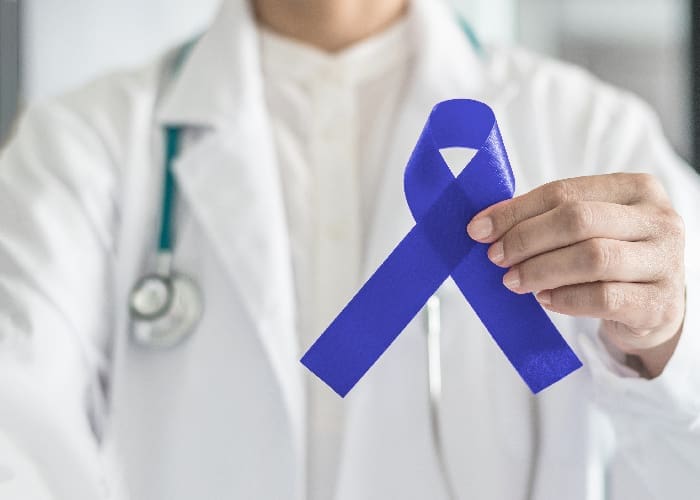
Dark Blue Ribbon For Colon Colorectal Cancer Awareness On Medical Doctor's Hand Support

Based on these trends, medical boards have updated their recommendations for first-time screenings.

  • Start at Age 45: For most people, colon cancer screenings should now begin at age 45.
  • Individual Risk Factors: If you have a personal or family history of polyps or colon cancer, inflammatory bowel disease or a genetic syndrome, you may need to start even earlier.
  • Follow-up: After your first colonoscopy, most people only need to be screened every 10 years.

Warning Signs and Prevention

Colorectal polyps and cancer do not always cause symptoms, especially at first. This is why regular screening is critical. However, you should talk to your doctor immediately if you experience:

  • A change in bowel habits.
  • Blood in or on your stool.
  • Persistent abdominal pain, aches or cramps.
  • Unexplained weight loss.

Beyond screenings, you can reduce your risk by maintaining a healthy weight through regular exercise, eating a vegetable-heavy diet with less red meat and limiting alcohol consumption.

Schedule your screening 

In Florida, roughly 30% of people who should be tested have not been. Our new GI clinic is here to bridge that gap.

Talk with your doctor about colon cancer screening; making that appointment could be a life-saving decision.

Ten Tips to Know About Sunscreen

By Bridget Sullivan, PA-C, Coastal Skin Surgery and Dermatology 

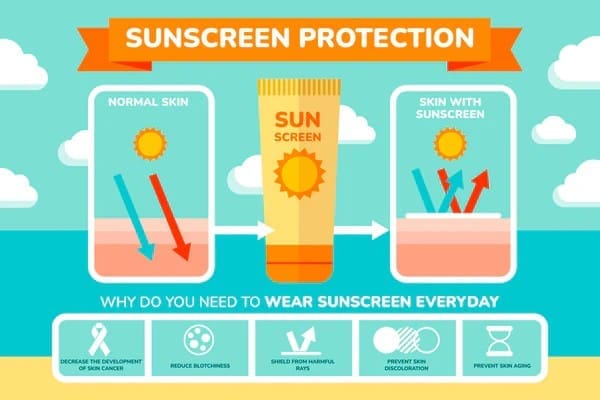
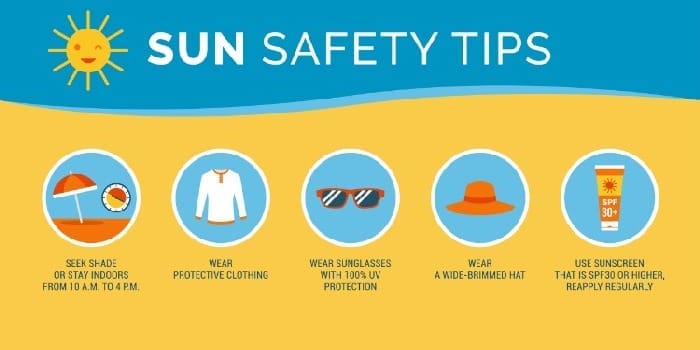
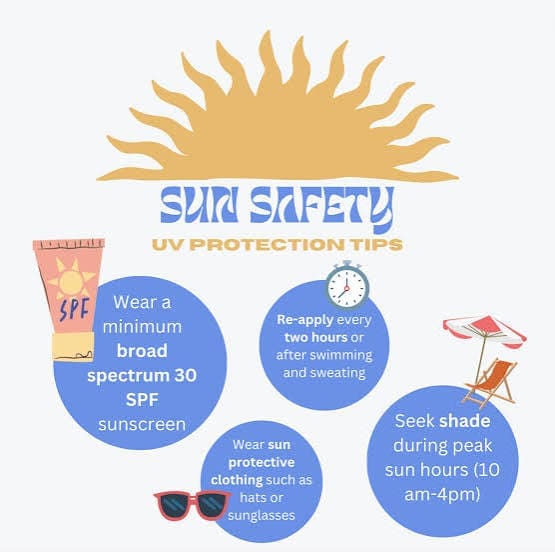
As we are approaching the summer months, it is important to use sunscreen daily, but to make sure we use it correctly. Sunscreen is the most important step in our daily routine to prevent premature aging and skin cancer. This article will go over some tips on using sunscreen properly.

1.) Apply Sunscreen SPF 30 or higher and make sure it is broad spectrum ( protects against UVA and UVB )

2.) Reapply every 90 minutes

3.) Wear water-resistant and sweat-resistant sunscreen if you will be outdoors, on the beach, or swimming.

4.) Don’t forget your ears, lips, tops of feet, and hands. These are common areas people miss during application and are common areas for skin cancers.

5.) Apply 15 minutes before going outside to ensure the sunscreen has absorbed into your skin.

6.) Make sure your sunscreen is not expired. Expired sunscreen is not as effective in protecting your skin.

7.) Avoid leaving sunscreen outside in high temperatures for prolonged periods. The heat can slowly break down some of the active ingredients that protect your skin.

8.) If you have sensitive skin, rosacea, or acne-prone skin, consider purchasing mineral sunscreen over chemical sunscreen.

9.) Use enough sunscreen. For full protection, adults typically need one ounce ( a shot glass full) to cover the entire body.

10.) Cloudy skies do not mean there are no UV rays. Up to 80% of UV rays can pass through clouds. Sunscreen should still be applied even on overcast beach days.

Sunscreen is one of the simplest ways to protect your skin—but small mistakes can significantly reduce its effectiveness. By applying enough, reapplying regularly, and covering often-missed areas, you can greatly reduce sun damage. Apply your sunscreen this summer to prevent skin cancer and keep your skin healthy and beautiful!

Sean of the South: Dispatches Del Camino

By Sean Dietrich

Sean Dietrich W Dog

“We have no rooms,” the innkeeper says over the phone.

“None?” I say.

“We are full.”

My wife and I are sitting on the ancient steps of la Iglesia de Santiago. The Church of Saint James. We are dusty and sweaty, and one of us smells like a giant armpit. (Moi.)

The stone doorway arch above us features carvings of angels and demons which date back to Roman times. Eight angels surround Christ, who is looking straight at me as though He is saying, “‘No room’ at the inn?—Now where have I heard THAT before?”

“Please,” I say to the innkeeper. “My wife and I are exhausted, there are no rooms anywhere.”

“I said no room.” And the woman hangs up.

Sean Dietrich Del Camino

It is late siesta in Spain. No traffic on the highways. No pilgrims on the Camino de Santiago. Streets are vacant. Most pilgrims have already found lodging for the evening and are already getting their complimentary massages.

At least that’s what I imagine. Because we have been hunting for a room all day, and there are no vacancies for another 20 miles. It is Holy Week, and the Camino is packed with hikers. Finding a room is like trying to locate a porta john at a bluegrass festival.

All day we have been seeing pilgrims turned away from hostels. Some, we learn, have been forced to sleep outside on doorsteps.

I am still staring at the call-ended screen. “She hung up on me,” I say in mock disbelief.

So, I take a moment. I need to get my head together. I need to figure out what we should do. Otherwise we’re sleeping on church steps tonight.

I wander into the church while Jamie sits on the steps watching our backpacks. I cross myself. I take a pew.

Tomorrow is Good Friday. And I am looking at a sculpture of Christ on a cross.

My entire evangelical childhood featured imagery of the crucifixion. We sang cute little Sunday school songs about it. We wore tiny crucifixes around our necks. We had paintings portraying the crucifixion. Jesus always had great abs.

Sean Dietrich Del Camino 2

But right now, in light of Good Friday, I’m thinking about what it truly means to truly die by crucifixion.

First, you’re stripped nude. You are not a fitness model. You are a 30-something male who eats a lot of bread and drinks wine with every meal. And it shows in your midsection.

Then, a crowd watches as a group of 18-year-old soldiers with egos to prove kick the proverbial excrement out of you. Next, they place you on timbers. They mutilate your hands with nails. Romans didn’t always use just one nail per hand.

Then, you just hang there.

It’s gross. It’s raw. There are no orchestras playing an overture. No cinematic key lighting. Your cross stands erected on Main Street. Your basic human reflex is to shield your nudity. But you can’t.

The boy-soldiers beneath your cross are screwing around, engaging in locker room banter, shooting craps, seeing which one will win your shoes.

You can’t breathe. Your lips are turning blue. Your arms are numb, devoid of circulation. Your serratus muscles and shoulders are torn from struggling against your own body weight.

The worst part is, almost none of your friends are here. Few are brave enough to attend your last hours. Doesn’t anyone care? Isn’t anyone going to say goodbye? Aren’t you important in anyone’s life?

Meantime, there are four other guys crucified alongside you. Hollywood films, and various evangelical bumper stickers will depict only three crosses on this fateful Friday. But in reality, there are five crosses, and you’re just one of them.

In other words, you are not given special treatment. No sacred ceremony. Charleston Heston does not attend your death scene. You are just another state inmate on the roadside. No big deal.

Most people who are crucified will hang for entire days before finally dying. Crucified persons do not receive burial, either. Usually, Romans let birds pick their skeletons clean. In simple terms, you are trash.

And you know what hurts most? It’s that people did this to you. Not wild animals. Not an act of nature. Fellow human beings.

Because the harsh truth is, people are not always nice. People hate. People start wars. People hurt each other, and often for no reason. They posture, they compete, they gossip. They invent rules and dogmas so they might force others unto their will.

And in this moment of nude agony, you see all these failings of human nature beneath you. You watch it all, with human eyes. And you forgive them. For we are fools who know not what we do.

I cross myself and exit the chapel.

My wife is sitting on the steps with our bags. We still have no rooms. We are low on food. We are in a foreign country, and we have a long way left to walk. But I think, perhaps, I’ve just remembered why I’m walking.

What Does it Mean to be Born Again?

By Kerry Knight, Minister, Emerald Beach Church of Christ

Dr Kerry Knight

“Jesus answered and said to him, most assuredly, I say to you, unless one is born again, he cannot see the kingdom of  God” (John 3:3).

“Jesus answered, ‘Most assuredly, I say to you, unless one is born of the water and the Spirit, he cannot enter the kingdom of God’” (John 3:5)

We have all heard the expression, “born again Christian.”  A Christian, by design and definition,  is one who follows Christ.  Is adding the words “born again” a redundancy?  Let’s look at the meaning of these two words.  In the account of Jesus meeting with Nicodemus (John chapter 3), this Pharisee was curious about the power of Jesus to work miracles.  He had come to the quick conclusion that God must be with Him, a teacher who has come from God.  At that point, Nicodemus was told, “You must be born again.”  The Pharisee did not understand Jesus, so the Lord probed deeper.  Jesus said that a man must be born of two things: water and Spirit.  To be born of water is a reference to water baptism.  To be born of the Spirit (the Holy Spirit) requires following the teachings of the Holy Spirit (God’s word) and obeying the Gospel, thus receiving the Holy Spirit as a gift (Acts 2:38).

When the Lord was giving the Great Commission to His apostles, just before He ascended back to the Father in heaven, “He said to them, ‘Go into all the world and preach the gospel to every creature.  He who believes and is baptized will be saved; but he who does not believe will be condemned’” (Mark 16:15-16).

Being “born again” is the creation of a new person.  Nicodemus had to have faith and to turn from sin through repentance to the living God.  Then he was prepared to have his sins washed away in baptism, just like the apostle Paul in Acts 22:16.  Being born again describes a person who has exercised their faith in obedience to the will of God.  They are now  Christians, abiding in Christ.

“Therefore, if anyone is in  Christ, he is a new creation, old things have passed away; behold all things have become new” (II Corinthians 5:17).

Built to Last: Why Durability Is the Real Secret to a Sustainable Home

By Aubrie Bailey, Marketing Coordinator, Flooring Depot of Panama City

When most people think about making their homes more environmentally friendly, they picture things like recycling, switching to LED light bulbs, or using reusable grocery bags. While those habits certainly matter, one of the biggest sustainability decisions homeowners make often goes overlooked: the materials they choose for their homes.

This Earth Day, it’s worth considering a simple but powerful idea — the most sustainable products in your home are the ones that are built to last.

The Problem with “Disposable” Home Products

In today’s fast-paced world, many products are designed with short life cycles. Trends change quickly, and some materials simply aren’t built to hold up to everyday life. When products wear out, they end up being replaced sooner than expected, creating more waste and more demand for new raw materials.

Flooring is a perfect example. In many homes, flooring experiences constant wear from foot traffic, pets, spills, and daily activity. If the material isn’t durable enough, it may need to be replaced far sooner than homeowners originally planned.

When that happens, the old flooring often ends up in a landfill, and new materials must be manufactured, transported, and installed. All of that adds up to a larger environmental footprint.

Why Durability Matters

Choosing durable flooring is one of the smartest long-term decisions homeowners can make — both for their home and for the environment.

Floors that are designed to withstand daily wear and tear can last for many years, sometimes even decades, with proper care. That longevity means fewer replacements, less waste, and fewer resources used over time.

Durable flooring also tends to perform better in busy households. Whether you have kids, pets, or simply an active home, high-quality materials are built to handle real life. Instead of worrying about scratches, dents, or water damage, homeowners can enjoy their space with confidence.

In other words, durability doesn’t just protect your floors — it protects your investment and reduces the need for constant updates.

Quality Over Trends

Another way to create a more sustainable home is by choosing styles that will stand the test of time.

While bold trends can be fun, flooring is one part of the home that benefits from timeless design. Neutral tones, natural textures, and classic patterns tend to remain appealing year after year. By selecting a style you’ll love long-term, you’re less likely to feel the need to replace it simply because trends have changed.

Pairing timeless design with durable materials is the perfect recipe for a floor that stays beautiful and functional for many years.

Proper Installation Makes a Difference

Even the highest-quality flooring performs best when it’s installed correctly. Professional installation ensures that materials are placed properly, seams are secure, and the flooring is prepared to handle daily use.

When flooring is installed the right way from the beginning, it helps maximize the lifespan of the product. That means fewer repairs, fewer replacements, and less waste over time.

It’s another reminder that sustainability often comes down to making smart decisions from the start.

Caring for Your Floors

Maintenance also plays a role in how long flooring lasts. Simple habits like using entry mats, cleaning spills quickly, and using proper floor cleaners can go a long way in preserving the look and performance of your floors.

Taking care of your flooring doesn’t just keep your home looking its best — it also helps extend the life of the materials, which is a key part of reducing environmental impact.

A Smarter Approach to Sustainability

This Earth Day, sustainability doesn’t have to mean completely overhauling your home. Sometimes, it’s simply about choosing products that are designed to last and investing in quality materials that will serve your home for years to come.

By focusing on durability, timeless style, and proper installation, homeowners can make choices that are better for both their homes and the planet.

At Flooring Depot, helping customers find long-lasting flooring solutions is part of what we do every day. Because when it comes to sustainability, the best floors aren’t just beautiful — they’re built to last.

If you’re considering new flooring, we invite you to visit our showroom at 1310 W 15th St in Panama City to explore our wide selection and speak with our team about options designed to stand the test of time. And right now, with 24-month special financing available, it’s a great opportunity to invest in quality flooring that will serve your home for years to come.


Subscribe to RSS
Secret Link