

















By Lauren Goldsby

Each fall, local Extension offices receive questions from homeowners concerned about trees that suddenly look unhealthy. Leaves may turn dull, develop brown edges, or begin dropping long before winter arrives. In many cases, however, the tree is not in trouble at all. It may simply be entering its normal dormant season.
When we think of deciduous trees, we often picture the brilliant reds, oranges, and yellows of northern forests. Here in the Florida Panhandle, many deciduous trees take a less dramatic approach. Their leaves may fade to yellow, brown, or tan before dropping, sometimes giving the appearance of a tree in decline.
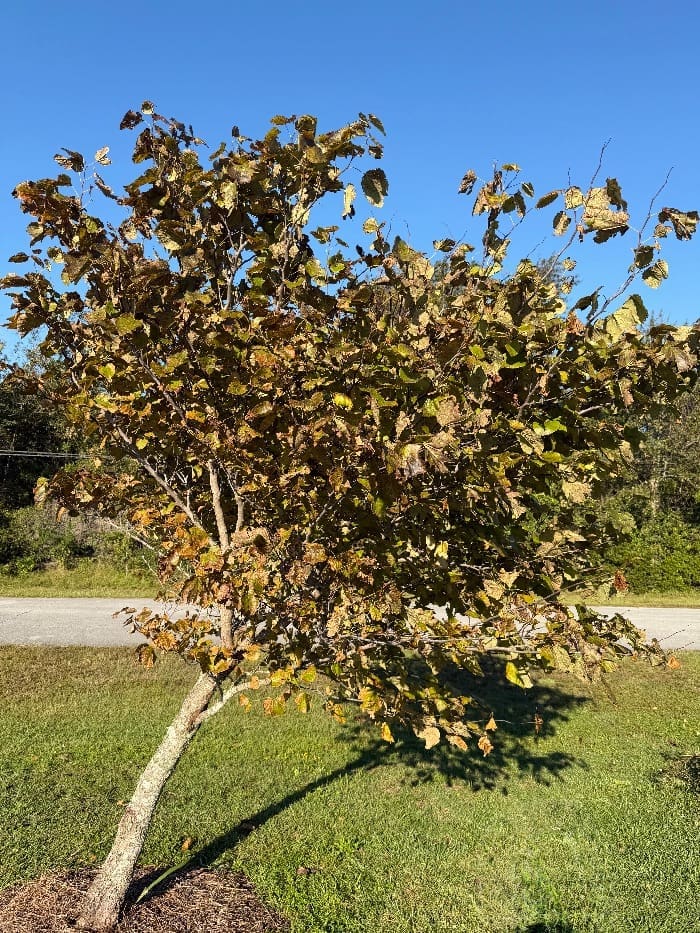
One of the environmental signals that triggers this annual transition is decreasing day length. As autumn days become shorter, deciduous trees receive cues that it is time to prepare for winter. Growth begins to slow, and the tree starts moving mobile nutrients from its leaves into the trunk and root system. These stored resources remain in reserve throughout the winter and help fuel new growth when spring arrives.
If you are unsure whether your tree is supposed to lose its leaves, the Florida-Friendly Landscaping™ Plant Guide is an excellent resource (https://ffl-apps.ifas.ufl.edu/plants/). Looking up your tree species can help determine whether it is deciduous and naturally enters winter dormancy each year.
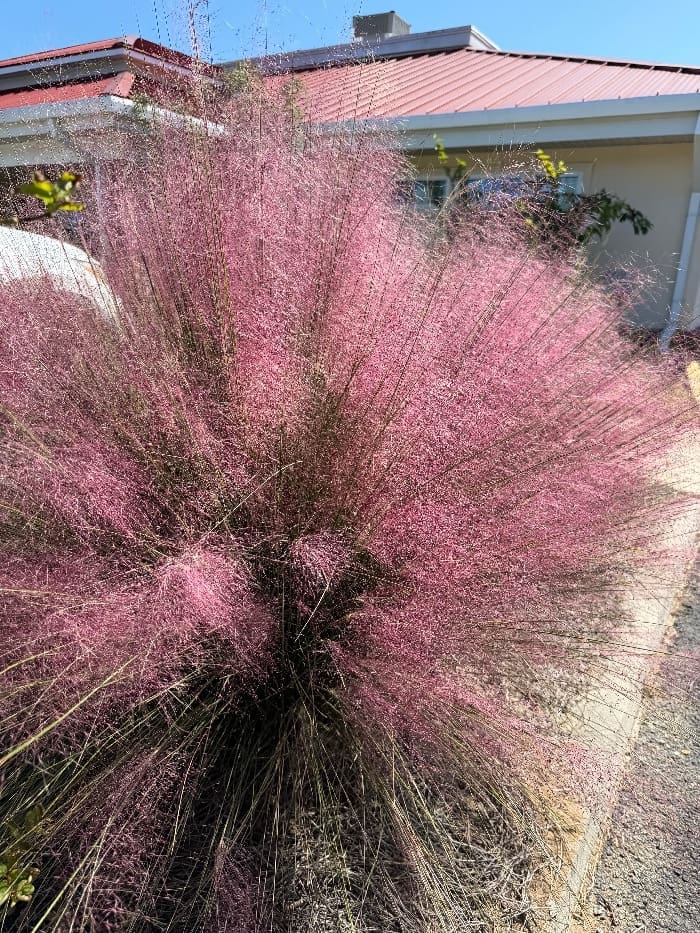
Interestingly, shorter days do not signal all plants to slow down. Some plants use the same seasonal cue for the opposite purpose. Muhly grass begins producing its signature pink-purple flower plumes in fall, while goldenrods brighten roadsides and natural areas with their golden blooms. Rather than preparing for dormancy, these plants respond to shortening days by entering their flowering cycle.
These seasonal changes serve as a reminder that plants are constantly responding to their environment. While some trees are winding down for winter, other plants are just beginning their most colorful display of the year.
An Equal Opportunity Institution. UF/IFAS Extension, University of Florida, Institute of Food and Agricultural Sciences, Andra Johnson, Dean. Single copies of UF/IFAS Extension publications (excluding 4-H and youth publications) are available free to Florida residents from county UF/IFAS Extension offices. Contact our office at 850-248-8091 or Email legoldsby@ufl.edu. Follow us on Facebook @bayifas and Instagram @ufifasbay.
 RSS