























By Lauren Goldsby

If you’ve spent time nurturing a garden, growing houseplants, or getting your frustrations out by pulling weeds, you’ve likely experienced some of the benefits of horticulture therapy without even realizing it. Horticulture therapy involves utilizing plant activities and is often accompanied by mindfulness practices to achieve therapeutic outcomes. Let’s dig into what that looks like in practice.
History of Horticulture Therapy
Before this practice had a name, people had been utilizing it for years. It’s part of a larger scope of therapy called nature-based interventions, which use nature to improve health and well-being. Horticulture therapy (HT) can affect both physical and psychological health and help people in varying ways depending on their circumstances. As early as the 19th century, Dr. Benjamin Rush (who is recognized as the father of American psychiatry), noted its benefit for people experiencing mental health issues. Since then, research has continued to show benefits for mental health and stress reduction in children, adults, and seniors.
Current Horticulture Therapy
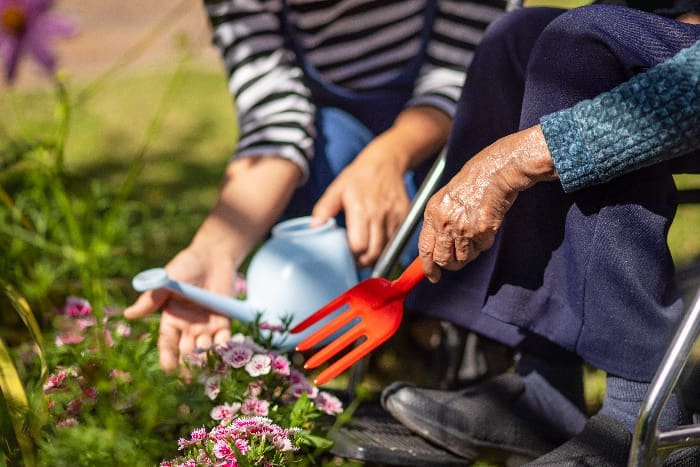
Research has shown the efficacy of participating in HT. Studies show that it can reduce anxiety and depression, improve student wellbeing and academic resilience, and benefit aging populations. Studies show a reduction in stress hormones, along with neuroprotective effects, following gardening-based activities.
In clinical settings, HT involves trained practitioners who plan, review, and lead activities, but don’t let that stop you, since these activities can still be done in a more casual setting. Activities are available online on the UF website and include a description of the activity and goals, a materials list, step-by-step instructions, safety considerations, and the intended population. You can search through different topics and populations to help narrow down activities that you may be interested in.
Activities and Where to Find Them
An activity I came across recently is making an insect hotel. This activity helps to teach the concept of local pollinators and insects and how they nest and survive during the colder months. In managed landscapes, our leaf litter and stems of plants are often bagged up and discarded. Building an insect hotel creates a safe environment for insects to rest, grow, and multiply. Participants are encouraged to think and talk about their own needs, which may look different from person to person. This activity can be done with materials you have lying around the house or garden and can be adjusted as needed for different age groups. The guidelines for this activity can be found here: https://hos.ifas.ufl.edu/media/hosifasufledu/therapeutic-horticulture-activities-database/pdfs/Insect-Hotel.pdf

Lauren Goldsby can be reached at legoldsby@ufl.edu. An Equal Opportunity Institution. UF/IFAS Extension, University of Florida, Institute of Food and Agricultural Sciences, Andra Johnson, Dean. Single copies of UF/IFAS Extension publications (excluding 4-H and youth publications) are available free to Florida residents from county UF/IFAS Extension offices.
 RSS
RSS